
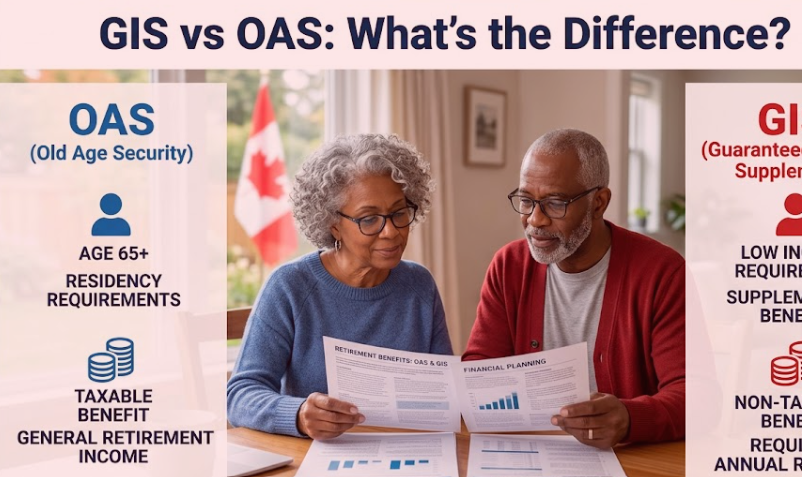
While many seniors in Canada receive financial assistance from government retirement programs, it can be confusing to understand the difference between the GIS vs OAS. These programs are similar but serve different purposes and have different eligibility requirements.
If you’re approaching retirement or are already collecting senior benefits, it’s important to understand the difference between GIS and OAS to maximize your income and make sure you’re getting all the benefits you’re entitled to. We’ll discuss how each program works, who qualifies, and whether you can collect both benefits at the same time.
What is the Old Age Security (OAS)?
Old Age Security (OAS) is a monthly pension provided by the Government of Canada to eligible seniors aged 65 and over.
Unlike the Canada Pension Plan (CPP), OAS is not dependent on your work history or contributions made during your working years. Instead, eligibility is largely determined by your age, legal status, and length of residence in Canada.
OAS is the primary source of retirement income for many retirees.
Before comparing benefits, readers should understand the qualification rules. For a complete breakdown, see our Old Age Security (OAS) Eligibility 2026 guide.
OAS: Key Features
- For eligible Canadians 65 years of age and older.
- Funded from the general revenue of the government.
- Not based on CPP contributions.
- From time to time, monthly payments can go up.
- And it can be put off for larger future payments.
What is the Guaranteed Income Supplement (GIS)?
Low-income seniors who get OAS also receive an additional monthly payment called the Guaranteed Income Supplement (GIS).
GIS assists qualifying low-income seniors with basic living expenses and improves their financial security in retirement.
GIS is income-tested, unlike OAS. That means if you earn more money in a year, you may qualify for less and receive less money.
Main Features of GIS
- For eligible OAS recipients only.
- For seniors with low incomes.
- Payment amounts vary based on income level.
- Typically not taxable.
- Reviewed annually against income data.
If you’re unsure whether you qualify, read our Guaranteed Income Supplement (GIS) Eligibility 2026 guide for detailed income requirements and application information.
GIS vs OAS: The Main Difference
The biggest difference between GIS vs OAS is their purpose.
OAS provides a basic retirement pension to eligible seniors, while GIS provides additional financial support to low-income OAS recipients.
Think of OAS as the foundation and GIS as extra assistance for seniors with limited income.
| Feature | OAS | GIS |
|---|---|---|
| Available at age 65+ | Yes | Yes |
| Based on residency | Yes | Yes |
| Based on income | No | Yes |
| Monthly payments | Yes | Yes |
| Must receive OAS first | No | Yes |
| Taxable | Generally Yes | Generally No |
| Intended for low-income seniors | No | Yes |
Who is eligible for OAS?
To be eligible for OAS while living in Canada, you generally need to:
- At least 65 years old.
- Be a Canadian citizen or permanent resident.
- Have lived in Canada for 10 years since the age of 18.
If you have been living outside of Canada, you may still be eligible in some situations.
Factors of OAS Eligibility
The government could consider:
- History of Residency
- Citizenship or lawful status
- Time in Canada
- OAS recovery income level tax4.
Who is eligible for GIS?
The program is for seniors with lower incomes, so GIS eligibility requirements are more stringent.
Generally, you should:
- Get OAS.
- I live in Canada.
- Meet the annual income thresholds set by the government.
Recipients should check their eligibility often, as income limits may change from year to year.
Many seniors receive both programs together. If you’re planning to apply, our How to Apply for Old Age Security in 2026 guide explains the application process and what documents you may need.
Is it possible to have both GIS and OAS?
That is true. In fact, most GIS recipients also receive OAS, as OAS eligibility is generally a prerequisite for GIS payment.
Your monthly OAS payment will be based on approved GIS.
Many low-income seniors find that getting both benefits provides much-needed financial help and assistance with the costs of everyday living.
Example
A senior who qualifies for OAS and has a low annual income may be eligible for:
- OAS payment monthly
- Further GIS payments
When combined, these benefits can give a significant boost to retirement income.
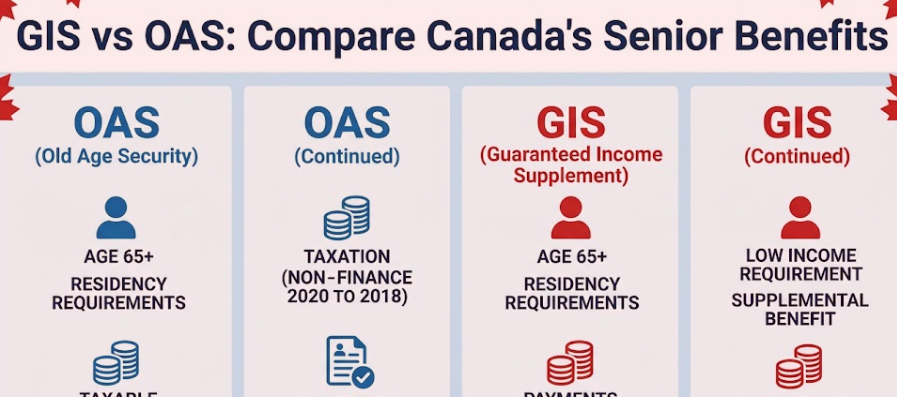
OAS and GIS are not the same as CPP.
Many Canadians also confuse OAS and GIS with the Canada Pension Plan (CPP).
The programs have different goals:
CPP
- Based on contributions paid while employed.
- The payment is based on the contribution history.
- Separate management from OAS and GIS.
OAS
- Primarily on the basis of age and residence.
- No employment contribution is required.
Geographic Information System (GIS)
- Additional help for low-income OAS recipients.
This information can help retirees create a more accurate retirement income plan.
Especially after retirement, income changes. Lify for GIS as well as OAS.
What’s the Difference Between GIS and OAS
Knowing the difference between the programs can help seniors:
- Apply for any benefits you think you may be entitled to.
- Get a better estimate for your retirement income.
- Do not forget about eligibility requirements.
- Prepare for future cash needs
- Respond quickly to changes in benefits.
Many seniors are surprised to learn they may qualify for GIS as well as OAS, particularly after adjustments to retirement income.
What happens if your income changes?
Because GIS is income-tested, changes in your annual income may affect your eligibility or payment amount.
Income changes can result from:
- Employment income is the amount of money that an individual receives as a result of their employment.
- Pension income
- Investment income is the return on funds that an individual invests in various investments.
- Changes in marital status
- Other Taxable Income Sources
Keeping your tax information up to date ensures that your GIS payments are calculated correctly.
If you’re updating personal information with government agencies, you may also find our How to Change Banking Information With CRA in 2026 guide useful for ensuring direct deposits continue without interruption.
How Much Do OAS and GIS Pay in 2026?
Old Age Security and the Guaranteed Income Supplement are reviewed periodically to determine if payment amounts should be updated to reflect inflation and changes in government policies. The amount of each benefit that you receive is based upon your age, your income, your years of residence in Canada, and your marital status.
OAS Payments
OAS provides a monthly pension to seniors 65 years and older. The pension is higher for seniors who delayed starting their pension payments.
GIS Payments
GIS is a monthly payment to low-income seniors who are now receiving Old Age Security (OAS) benefits. Unlike OAS, GIS payments decrease as the individual’s income increases. GIS payments are reviewed each year with the information from the individual’s income tax return.
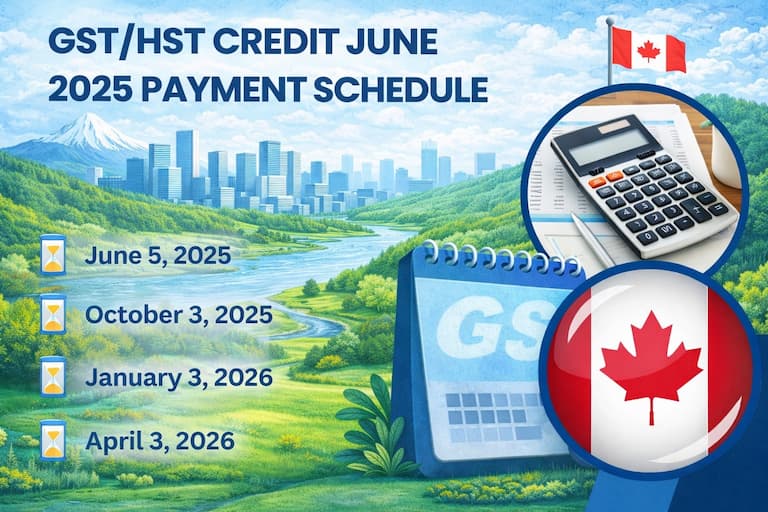
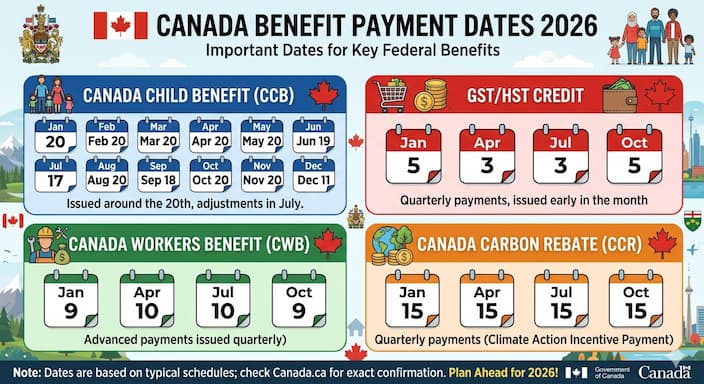
If you’re looking for current payment schedules, check out our Canada Benefit Payment Dates 2026 guide to stay updated on upcoming deposit dates.
Applying for OAS and GIS
OAS and GIS go hand in hand, but getting started isn’t always the same for everyone.
For Old Age Security (OAS)
Some people don’t have to lift a finger—they’re enrolled automatically. If you’re not one of those lucky ones, you’ll have to apply yourself. You can do it online using your My Service Canada Account, or you can stick with the old-school way and send in a paper application.
Before you jump in, make sure you have a few things ready:
- Your Social Insurance Number
- something that proves your age
- Details about your time living in Canada
- And your bank info if you want direct deposit.
For a detailed walkthrough, read our How to Apply for Old Age Security in 2026 guide, which explains each step of the application process.
Applying for GIS
If you’re eligible for GIS, you might need to apply—unless you get enrolled automatically. It all comes down to your income, so make sure you file your yearly tax return on time.
Service Canada looks at the income you reported to decide if you qualify and how much they’ll pay you.
What Happens If Your GIS Payments Stop?
In some situations, GIS payments may stop or be reduced.
Common reasons include:
- Your annual income increased above the eligibility threshold.
- income tax return was not filed on time.
- Your marital status changed.
- Service Canada requires additional information.
- You no longer meet residency requirements.
If your GIS payments suddenly stop, check whether you’re still eligible and contact Service Canada to find out what’s going on. They can help clarify things for you.
Our upcoming guide, What Happens If Your GIS Payment Stops?, explains the most common reasons for payment interruptions and the steps you can take to restore your benefits if you’re still eligible.
Common Misconceptions About GIS and OAS
“Everyone Who Receives OAS Also Gets GIS”
That’s not accurate. Just because someone gets Old Age Security (OAS) benefits, it doesn’t mean they automatically qualify for the Guaranteed Income Supplement (GIS). The GIS is actually designed to help seniors who have a low income, so not everyone who gets OAS will be eligible. To get GIS, your income has to be below a certain level, and that’s what determines whether you qualify or not.
“You Must Have Worked to Receive OAS”
Unlike CPP, OAS is not based on employment history or payroll contributions. Eligibility is primarily based on age and residency.
“GIS Is Taxable”
GIS payments are generally not taxable, although they may still be considered when determining eligibility for certain programs.
“You Don’t Need to File Taxes If You Receive OAS”
Even if your income is low, filing your tax return each year is important. Service Canada uses your tax information to assess GIS eligibility and calculate payment amounts.
Tips to Maximize Your Benefits
To help ensure you receive the benefits you’re entitled to:
- File your income tax return every year, even if you have little or no income.
- Keep your personal and banking information up to date.
- Review your benefit statements regularly.
- Notify Service Canada if your circumstances change.
- Apply early if you’re not automatically enrolled.
By following these easy steps, you can avoid delays and get the right amount of money. This will help make sure you get your payment on time and without any mistakes.
Frequently Asked Questions
What is the main difference between GIS and OAS?
Eligible seniors can get a monthly pension called OAS, which is mainly based on how old they are and where they live. There’s also another benefit called GIS, which is extra money each month for seniors who don’t have a lot of income and are already getting OAS.
Can I receive both GIS and OAS?
Many seniors who are eligible get both benefits. The GIS is meant to add to the OAS for people who don’t have a lot of money coming in.
Is GIS taxable?
It’s usually the case that GIS payments are not subject to tax. That being said, it’s a good idea to check the latest information from the government or talk to a tax expert if you’re unsure about your specific situation. They can give you the most up-to-date advice and help you figure out what you need to do.
Do I need to apply for GIS separately?
So, when it comes to enrollment, some seniors are already signed up, but others have to take the initiative and apply. The thing is, filing your taxes every year is really important because that’s how they figure out if you’re eligible or not – they use your income to make that decision.
Can my GIS payments change each year?
Your GIS payments get looked at every year. They might go up, down, or even stop, depending on whether your income or personal situation changes.
Conclusion
Understanding the difference between GIS and OAS is an important part of retirement planning in Canada. Although both programs provide financial support to seniors, they serve different purposes and have different eligibility requirements.
Old Age Security offers a monthly pension based primarily on age and residency, while the Guaranteed Income Supplement provides additional assistance to eligible low-income seniors receiving OAS. Knowing how these programs work together can help you make informed decisions, avoid missed benefits, and better plan your retirement income.
If you’re approaching retirement, review your eligibility early, keep your tax information current, and stay informed about updates to Canada’s senior benefit programs.
Pingback: What Happens If Your GIS Payment Stops? | GIS Guide 2026
Pingback: CPP Early vs Late Retirement Guide for 2026
Pingback: How Marriage Affects GIS Benefits in Canada (2026 Guide)
Pingback: GIS Application Checklist Canada: Complete Guide 2026
Pingback: How OAS Is Calculated in Canada (2026 Guide)