

Old Age Security (OAS) is one of Canada’s most important retirement supports, providing monthly financial assistance to eligible seniors. Even so, a lot of Canadians are not fully clear on how OAS is calculated and how the size of their OAS payment is actually set. Unlike some other retirement arrangements, OAS is not worked out from your employment record, or based on how much money you contributed during your working years. Instead, the payment mostly depends on a few key things, like your age, your years of residence in Canada, your income level, and whether you choose to pause or delay the moment you begin receiving benefits.
If you know how OAS is calculated, you can build a better estimate of your future retirement income, organize your budget, and make wiser decisions about the timing of payments.
The Government of Canada revises OAS amounts from time to time, factoring in inflation, but the final amount you receive can shift with your own situation.
What Is Old Age Security (OAS)?
Old Age Security is a monthly benefit put forward by the Government of Canada, for eligible seniors. It is aimed to give basic financial backing during retirement, even if that support feels a little limited at the start.
In contrast to the Canada Pension Plan (CPP), OAS does not depend on previous employment contributions. A person can still qualify for OAS even if they have never worked in Canada, as long as they satisfy the residency conditions and other eligibility details.
Many retirees end up receiving OAS alongside other benefits, including CPP, private pensions, and the Guaranteed Income Supplement (GIS), which is meant to help those with lower income.
If you want to understand how these retirement programs differ you can read our guide on GIS vs OAS: What’s the Difference and see how each one works, plus who may qualify.
How OAS Is Calculated
Your OAS payment amount is determined by a few major factors:
- Your age when you begin receiving OAS
- How many years you have lived in Canada
- Your income level
- Whether you choose to delay your OAS payments
Let’s take a closer look at each factor, and yes it all ties back to timing and eligibility.
How OAS is calculated based on age
Most people start with OAS at 65 years old. If you meet the requirements, you typically begin getting the monthly amount from the month after your 65th birthday.
Canada also lets eligible seniors wait longer, until age 70.
Each month you keep delaying after age 65, your monthly payment goes up. The longest deferral is five years.
For instance:
- Starting OAS at 65 means you get the usual monthly payment.
- Waiting until age 70 gives you a permanently bigger monthly benefit.
When you choose to begin OAS depends on your health, your financial picture, your retirement savings, and the income you expect to need.
Time lived in Canada affects OAS eligibility
One of the most important things for understanding how OAS is worked out is your residency history, not just what you did at work.
To get a full OAS pension, you generally need
- At least 40 years of residence in Canada after you turn 18
If you lived in Canada for less than 40 years after age 18, you may still qualify for a partial OAS pension, and yes the rules can be strict but manageable.
The partial pension is worked out using the number of years you were resident in Canada after age 18.
For example:
40 years of residence = 100% OAS pension
30 years of residence = 75% OAS pension
The basic formula is:
Years of Canadian residence after age 18 ÷ 40 = OAS percentage
So, for someone with 30 years of residence
30 ÷ 40 = 75%
That means they may receive around 75% of the full OAS amount.
OAS Is Not Tied to Employment Contributions
A common misunderstanding is thinking OAS works like CPP, but the two programs are calculated in different ways, because they are designed for different purposes.
CPP depends on
- Employment earnings
- CPP contributions
- Years with contributions
- Average earnings
OAS depends mainly on:
- Residency background
- Age
- Income level
So two people who had different careers can still get the same OAS amount, as long as they satisfy the same eligibility requirements, even if their work paths look completely different.
For Canadians planning for retirement, understanding the difference between CPP and OAS matters a lot when estimating total retirement income, because it impacts what streams of money you can expect.
How income changes OAS payments
OAS is available to many seniors, but for higher-income individuals the payments may be reduced via the OAS recovery tax, often called the OAS clawback.
If your annual income goes past the recovery threshold set by the government, you might have to repay part, or all, of your OAS.
The repayment amount is figured using the income you have above that threshold.
Example:
- Your income is above the OAS recovery limit, and the government takes the excess portion into account.
- Then, a set percentage of that excess income is deducted from your OAS payments.
- In plain terms, the higher your income, the bigger the repayment may become.
Income that can change the OAS clawback math includes, employment income , pension income, investment income rental income, and any other taxable income too.
Planning your retirement income carefully can help prevent unpleasant surprises, with OAS reductions that nobody asked for.
You can learn more about how income reporting works in our guide: How to Report a Change of Income to CRA in 2026.
OAS Payment Adjustments and Inflation
OAS payments are reviewed and adjusted regularly in order to match changes in the cost of living.
These updates rely on the Consumer Price Index (CPI), which is the measure used for inflation across Canada.
If the cost of living increases, OAS payments can also go up, so seniors can keep their purchasing power.
The government checks OAS amounts each quarter, meaning:
- January to March
- April to June
- July to September
- October to December
These changes help ensure retirement benefits keep pace with expenses that keep climbing.
Full OAS Pension vs Partial OAS Pension
The amount you end up receiving depends, on whether you meet the rules for a full pension or a partial one, and yeah it matters.
Full OAS Pension
You might get the full amount if:
- You are 65 years of age or older
- Satisfy the Canadian residency requirements
- You resided in Canada for at least 40 years, after turning 18
Partial OAS Pension
You may receive a partial amount if:
- You have been living in Canada for less than 40 years, after age 18
- meet the minimum eligibility rules
Also, the longer you stay in Canada, the larger your partial OAS amount may become.
How OAS works for Immigrants
A lot of new arrivals in Canada ask if they can receive OAS.
Immigrants can qualify if they:
- Are 65 years old or older
- Have lived in Canada for the needed period
- Meet citizenship, or residency obligations
Canada also has international social security agreements with specific countries. Through these agreements, some people may combine periods of residence or contributions made in another country, with the Canadian requirements.
If you moved to Canada later in life, it’s smart to check your eligibility early, so you can get a clearer feel for what your retirement benefits might look like.
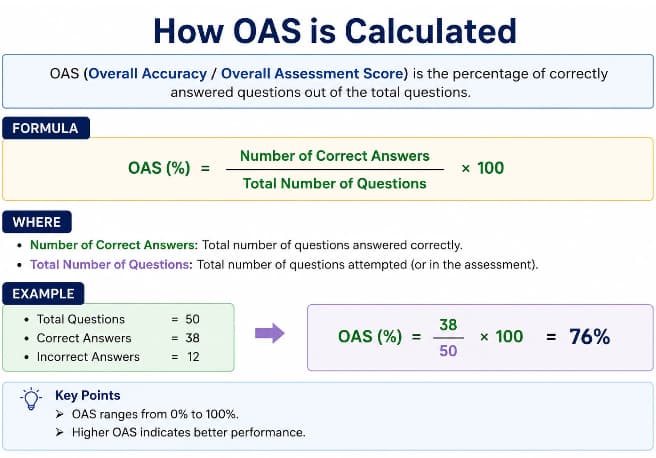
Example of how OAS could be calculated
Let’s use a straightforward example.
Person details:
- Turns 65 in 2026
- Lived in Canada for 35 years after age 18
- Has income under the OAS recovery threshold
So the math might go like this:
- 35 years ÷ 40 years = 87.5%
- That person could receive about 87.5% of the full OAS pension.
Even so, the final amount still depends on the government-approved payment rates when your benefits actually start.
How to review your estimated OAS amount
People in Canada can look at their benefit info using their online government accounts.
You can see things like:
- OAS eligibility
- Payment history
- Benefit estimates
- Application status
For step-by-step instructions, visit our article My Service Canada Account vs CRA My Account: What Is the Difference? to understand which online service you need for retirement information.
When should you apply for OAS
You should apply for OAS before you actually expect payments to begin. In a lot of situations, Service Canada may enroll you automatically if you meet the requirements, yet some people need to file a request anyway. Applying early can help you steer clear of payment delays, and that matters more than most people think.
You can learn more about the application process in our guide on How to Apply for Old Age Security in 2026.
Tips to Get the Most out of Your OAS
Below are several tactics that may support you in receiving the highest possible OAS amount.
- Check your residency record carefully
Confirm that your Canadian residence details are correct and up to date. Even small mismatches can cause complications.
- Think about OAS deferral
If your retirement income is sufficient, postponing OAS can raise your monthly benefit. In other words, you are trading time for a larger payment later.
- Regulate your retirement income flow
When your income is high, the OAS recovery tax can kick in. Careful withdrawal planning from retirement accounts may help keep your taxable income in a steadier range.
- Update your CRA profile
If your income changes, your marital status shifts, or any personal information changes, those updates can affect how your benefit is calculated.
You can also read How to Change Banking Information With CRA to help ensure your records stay right and up to date.
Final Thoughts: Grasping How OAS Gets Calculated
When you understand how OAS is calculated, it is easier for Canadians to make smarter retirement choices. The benefit you get depends on your age, how many years you resided in Canada, your income level, and the moment you choose to file your application.
Even if OAS gives really important financial help, it is still just one piece of a whole retirement plan. Looking at your CPP benefits, personal savings, any pensions, and the way you plan your income can put everything together in a steadier way and support a stronger future.
Also, understanding how the OAS calculation works before you retire can help you forecast what you might receive, so you avoid unpleasant surprises once benefit payments start.
Pingback: OAS vs CPP vs GIS Comparison for Canadian Seniors
Pingback: What Happens to GIS After a Spouse Dies | 2026
Pingback: What Income Affects GIS? Financial Advisor Guide