
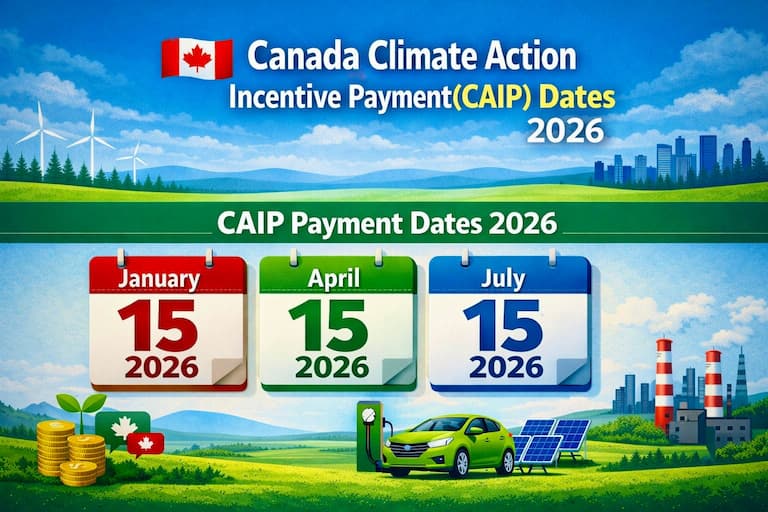
The financial support programs that Canada currently implements need to grow in importance because households in Canada face increasing energy and fuel expenses. The Climate Action Incentive Payment (CAIP) provides essential support to Canadians because it delivers tax-free quarterly payments that help them pay for the federal carbon pricing system.
You need to understand the Canada Climate Action Incentive Payment (CAIP) Dates 2026 because it helps you manage your finances while you track government benefits and monitor your Canada Child Benefit Payment Dates 2026 and GST credits programs.
The complete CAIP payment schedule, together with province-specific payment amounts, eligibility requirements, and the benefits impact on your financial planning process, will be explained in this comprehensive guide.
What is the Climate Action Incentive Payment (CAIP)?
The Climate Action Incentive Payment (CAIP) is a government benefit that returns carbon tax revenues directly to residents in eligible provinces. The system guarantees that most households will receive carbon pricing refunds that exceed their total carbon pricing expenses.
The CAIP program provides financial assistance to citizens while supporting national governmental objectives, which include other major benefits on the Benefits Pulse Hub, including GST/HST Credit Payment Dates 2026 and Old Age Security (OAS) program.
- Key Features:
- Tax-free payments
- Paid every three months
- Automatic calculation occurs after taxpayers complete their tax returns
The absence of an additional application process makes CAIP the simplest benefit to obtain.
Canada Climate Action Incentive Payment (CAIP) Dates 2026 (Full Schedule)
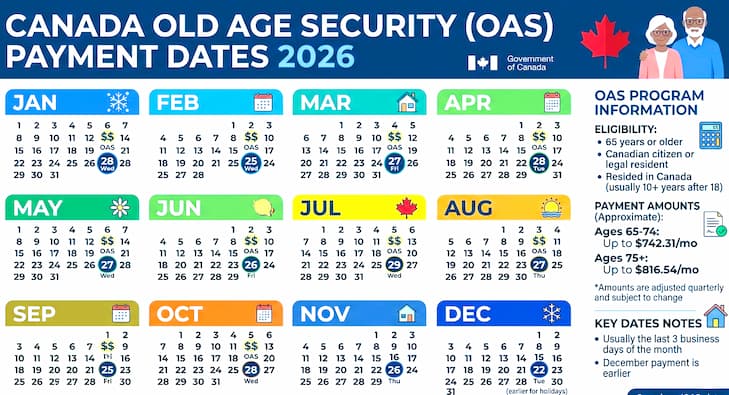
The CAIP is issued four times a year, making it a reliable source of periodic income, just like other scheduled benefits, such as OAS Payment Dates 2026.
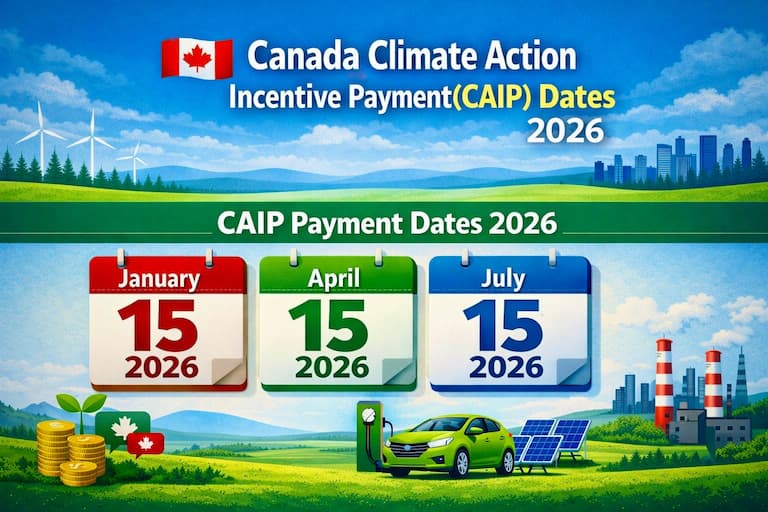
Here are the expected Canada CAIP Payment Dates 2026:
| Quarter | Payment Date (2026) |
|---|---|
| Q1 | January 15, 2026 |
| Q2 | April 15, 2026 |
| Q3 | July 15, 2026 |
| Q4 | October 15, 2026 |
These dates align closely with other benefit cycles, so if you’re already tracking your GST Payment Dates 2026, it becomes easier to plan your monthly budget.
Province-wise Climate Action Incentive Payment Breakdown 2026
The amount you receive depends on your residential location. The federal carbon pricing system applies to the following provinces:
- Alberta
- Ontario
- Saskatchewan
- Manitoba
- New Brunswick
- Nova Scotia
- Prince Edward Island
- Newfoundland and Labrador
We will explain it step by step.
Ontario Climate Action Incentive Payment (CAIP) 2026
- Annual cost for a single adult is approximately $ 488.
- The annual cost for a couple amounts to approximately $ 732.
- The annual cost for a family of four amounts to approximately $ 976.
The payment method involves making quarterly payments, which cost approximately 122 dollars for each installment.
The combination of these payments will bring you better financial stability if you already receive benefits from the GSTHST Credit.
Alberta CAIP 2026
- Single adult annual expenses total approximately $ 772.
- A family of four’s annual expenses total approximately $ 1544.
Alberta residents receive higher payments because their energy costs exceed regular expenses.
Saskatchewan CAIP 2026
- Single adult: ~$680/year
- Family of four: ~$1,360/year
Rural supplements may increase total payments.
Manitoba CAIP 2026
- Single adult: ~$528/year
- Family of four: ~$1,056/year
Atlantic Provinces CAIP 2026
The following locations are included in the list:
- New Brunswick
- Nova Scotia
- PEI
- Newfoundland and Labrador
The approximate monthly expenses for a single adult range between $480 and $600. The approximate monthly expenses for a family of four range between $960 and $1,200.
How Much Can You Receive in 2026?
Your total CAIP amount depends on:
- Province
- Family size
- Marital status
- Rural eligibility
The total amount of your CAIP benefits depends on your current residential province, the number of people in your household, your marital status, and your eligibility for rural areas.
Example:
Family of 4 in Ontario:
- Annual benefit: ~$976
- Quarterly payment: ~$244
👉 When combined with benefits like Canada Child Benefit (CCB) and OAS payments, this can significantly boost your yearly income.
How Climate Action Incentive Payment (CAIP) Impacts Your Monthly Budget
The Climate Action Incentive Payment (CAIP) functions as a quarterly payment, but its total value requires a breakdown into monthly payment amounts for proper evaluation. The payment should not be viewed as a single transaction, but rather it serves to decrease your annual expenses throughout the entire year.
A family in Ontario that receives approximately $976 in yearly benefits receives more than $80 in monthly assistance. The funds can be used to cover essential costs, which include fuel, electricity, and transportation expenses.
CAIP functions as an essential component of monthly household budgeting when it is combined with GST credits and child benefits. Families can establish better budgets through this breakdown, which helps them understand their financial situation, while it enables them to make better choices about their expenses.
Rural Supplement (Extra Benefit)
People who live in rural areas or small towns can receive an extra benefit of
👉 10% supplement
The program provides particular advantages to people who need to deal with increased expenses for their transportation and fuel expenses.
Eligibility Criteria for CAIP 2026
To qualify:
The applicant must reside in a province that meets eligibility requirements. Applicant must be at least 19 years old or have dependents to qualify. The applicant must complete the tax return filing to meet requirements.
The tax filing requirement applies to all benefits that are mentioned on the Benefits Pulse Hub. The requirement exists because tax filing needs to be done even when there is no income to report.
How to Apply for Climate Action Incentive Payment (CAIP)
No separate application needed!
Steps:
- File your income tax return
- CRA calculates your eligibility
- Payments are issued automatically
Payment Methods
- ✔ Direct deposit (fastest)
- ✔ Mailed cheque
Direct deposit is recommended to receive payments on time—especially if you’re also receiving CPP or OAS benefits.
Common Reasons for Payment Delays
- Not filing taxes
- Incorrect bank details
- The address change was not updated
- Province change
Keeping your CRA profile updated is essential to avoid delays.
What Happens If You Miss a CAIP Payment?
The concern about missing a CAIP payment can be resolved in most cases that need quick resolution. The first step to take when you do not receive your expected payment requires you to check the status of your tax return with the CRA.
The next payment cycle will deliver delayed payments, which will also be given as a lump sum when the problem is fixed. You need to check your banking information and your mailing address information because both of these details need to be correct before you submit your application.
You can use your online account or direct contact with the CRA to find the reason why your problem continues. Also, you will maintain your financial support rights through active steps that you take to secure your benefits.
Latest CAIP Updates for 2026
- Payments continue quarterly
- Rural supplement remains active
- Inflation adjustments may apply
- Government focus on affordability continues
CAIP vs Carbon Tax
| CAIP | Carbon Tax |
|---|---|
| Benefit you receive | The benefit you receive |
| Paid quarterly | Applied to fuel |
| Tax-free | The cost you pay |
CAIP ensures that most households receive more money back than they pay.
Why the Climate Action Incentive Payment (CAIP) is Important
- Helps offset rising fuel costs.
- Supports environmentally responsible behavior.
- Provides predictable financial support.
- Complements other benefits like GST, CPP, and OAS
Important Points to Remember
- CAIP is paid 4 times a year
- No application required
- Must file taxes
- Amount varies by province
- Rural residents get extra
Frequently Asked Questions (FAQs)
1. When is the next CAIP payment in 2026?
April 15, 2026
2. Do I need to apply?
No, it’s automatic after tax filing.
3. Is CAIP taxable?
No, it is completely tax-free.
4. Can I receive CAIP with other benefits?
Yes, you can receive CAIP along with GST, CCB, CPP, and OAS.
5. What if I move provinces?
Your payment will be adjusted based on your new province.
Final Thoughts
The Canada Climate Action Incentive Payment (CAIP) Dates 2026 are an essential part of financial planning for Canadian households. The CAIP benefits provide continuous support throughout the entire year because living expenses keep increasing.
The CAIP program needs expansion because it works together with GST credits, OAS pensions, and child benefits to create more financial support for people. The process of tracking payment dates while staying informed about upcoming payments enables you to receive all your entitled benefits.
Pingback: Canada Workers Benefit 2026: Full Guide | Benefits Pulse Hub