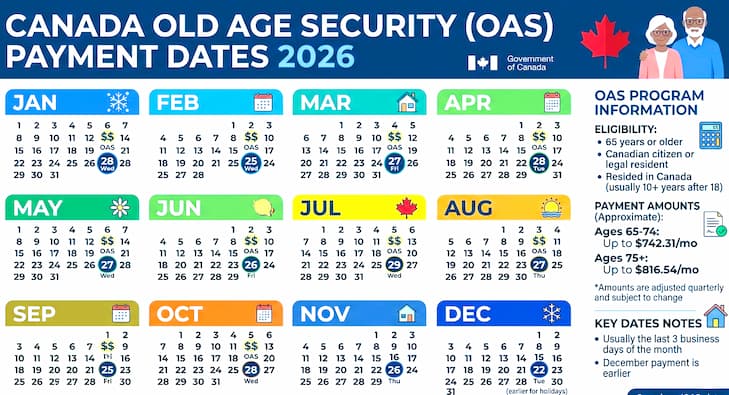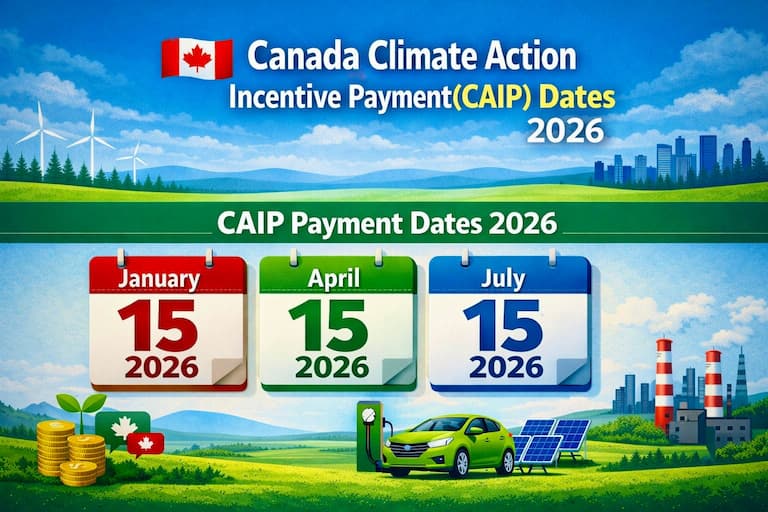

Marriage can be this big life moment, and it can spill over into a bunch of the money stuff too, even with government retirement supports. For Canadian seniors who receive the Guaranteed Income Supplement (GIS), certain changes like getting married, separating, divorcing, or becoming widowed can shift how the benefits are calculated. Getting the idea of How Marriage Affects GIS matters, because your marital status, plus the combined household income, may change whether you qualify and also how much GIS you end up receiving.
A lot of seniors ask, “Does marriage affect GIS payments?” and the answer is yes. GIS is tied to your income plus your marital setup, so when your household story changes, the government may recheck your eligibility and the amount you get.
Knowing how marriage affects GIS can help seniors prevent unpleasant surprises in payments and make sure they are receiving the right financial help.
This article walks through how marriage can change GIS calculations, how spouse income influences benefits, what you should do after getting married, and how GIS works differently for seniors who are single versus seniors who are married.
What Is GIS and Why Does Marital Status Matter?
The Guaranteed Income Supplement (GIS) is a monthly benefit that the Canadian government gives , to help low income seniors who already receive Old Age Security (OAS). While OAS is steady, GIS is income tested, so what you get does not really remain constant. It depends on your yearly income and also on how your household is organized . This is why understanding How Marriage Affects GIS matters, because shifts in marital status can change how your earnings are evaluated and it can, in turn, impact the GIS amount you end up receiving.
Your marital status matters, because GIS calculations are tied to which category you fall into, like this:
- Single
- Married
- Living in a common-law relationship
- Separated
- Divorced
- Widowed
If you are married, or you are living with a partner, the government usually looks at your combined income when it decides if you qualify for GIS.
So, your spouse’s income can end up impacting your GIS payment, even if that money is not directly “yours” in the everyday sense.
For seniors who are reviewing retirement income options, it can also be useful to know what separates OAS vs GIS. If you want the full picture, you can read our guide on GIS vs OAS and see how these two benefits can work together.
Does Marriage Affect GIS Benefits in Canada?
Yes, marriage can mess with your GIS benefits because the government works with different income thresholds for single seniors versus couples.
Once you get married, Service Canada goes back and recalculates your GIS entitlement based on stuff like:
- Your income
- Your spouse’s income
- Your combined family income
- Your updated marital status
If your spouse has little income or basically nothing, your GIS payment might not drop much. Yet if your spouse earns income, then your combined income could rise, and that could lead to a smaller GIS amount.
In some situations, a senior who was getting a higher GIS amount while single can end up with a lower amount after marriage, mainly because the household income picture changes.
How Spouse Income Affects GIS Calculations
After marriage, spouse income is one of the biggest drivers.
GIS is not only about what you personally earn. For married or common-law couples, the government generally considers shared income details from both partners.
Income that can influence GIS calculations includes:
- Employment income
- Pension payments
- Registered Retirement Savings Plan (RRSP) withdrawals
- Investment income
- Rental income
- Other taxable income sources
For example:
Before marriage:
A senior living alone may qualify for a higher GIS amount because only their own income is considered, nothing shared.
After marriage:
If they marry someone with pension income or other taxable income, their combined income may increase. Then GIS payments can be adjusted.
Since GIS is reviewed on a regular basis, changes in household income can affect future payments
GIS Rules for Married Couples vs Single Seniors
The GIS rules can feel different depending on your relationship situation.
Single Seniors
Single seniors are assessed based on their individual income. Because they do not share household income with a spouse or partner, their GIS calculation uses just their own financial data.
Married or Common-Law Seniors
Married couples get assessed based on a combined income amount. That makes sense because spouses often share rent or mortgage costs, food and other household resources.
The top GIS payment level for married couples can also shift, depending on whether both spouses get OAS and if both are eligible for GIS.
What happens to GIS after getting married?
If you marry while you’re already receiving GIS, you need to report the change to the government as soon as you can.
If you don’t report the update to your marital status you could end up with
- Incorrect GIS payments
- Overpayments that you have to repay
- Delays when future benefit amounts are reviewed or adjusted
After marriage, Service Canada may look again at your file and adjust your GIS amount based on your updated family income situation.
It matters a lot to keep your information current with government programs. Seniors can also check our guide on how to update marital status with CRA in 2026, for extra details about reporting family changes.
How to report a marriage to Service Canada
You can report a change in marital status using different routes, including
- My Service Canada Account
A lot of seniors can update their details online through their secure government account, this is usually the quickest option.
- Contact Service Canada
You can also call or message Service Canada and share the specifics about your marriage.
- Submit the information that’s needed
You might be asked to provide things such as:
- The date of the marriage
- Details about your spouse
- Your own personal identification information
Keeping your records correct matters, because it supports how your GIS payments are figured.
Does Marriage Always Mean Lower GIS Payments?
Not always.
Getting married does not automatically make your GIS decrease. What happens depends on your combined household income.
Your GIS might:
- Remain unchanged if your spouse has little or no income
- Drop if your spouse earns a meaningful amount
- Shift after yearly income reviews
For some seniors, getting married can give financial advantages, because both people can spread out costs like housing, utilities, and everyday living expenses.
What happens with GIS depends on your personal financial setup.
How separation or divorce can affect GIS
Marriage changes are not only about the wedding. Separation or divorce can also impact GIS eligibility.
If you split from your spouse, your income situation can shift. In certain situations, you may receive GIS amounts under the single senior rules, as long as you meet the government requirements.
You should report
- The separation date
- When the divorce is finalized
- Any changes in your household income
If you delay reporting the separation, benefits might be calculated incorrectly.
How becoming widowed affects GIS
If your spouse dies, your GIS amount may be adjusted, since your household income picture has changed.
After you become widowed:
- Your spouse’s income usually will no longer be counted
- You may qualify under the single senior rules
- Your GIS amount can go up or down depending on your total income
- You should tell the government about the death of a spouse,so they can reassess your benefits
A lot of seniors also check whether they still qualify for other programs after a spouse passes away, including changes around OAS and survivor-related benefits
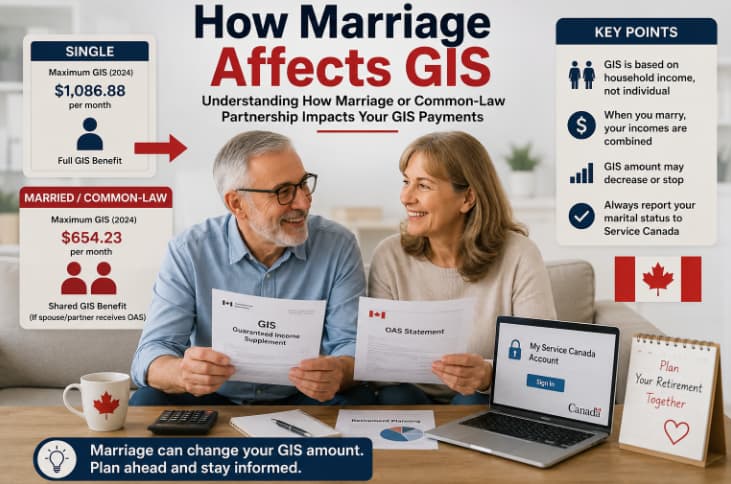
Marriage and OAS: how they get linked
Many seniors receive both OAS and GIS, but the rules are not the same
OAS eligibility is mainly tied to
- Age
- Canadian residency history
GIS is mainly tied to
- Income
- Marital status
Marriage usually doesn’t disturb basic OAS eligibility, but it can impact GIS since GIS works with income limits set for couples
For people planning retirement income, learning how OAS is calculated can help you see the bigger picture of overall retirement benefits
Common Mistakes Seniors Make After Marriage
Many GIS recipients make mistakes that can cause payment issues
Common issues include:
Not reporting marriage
Some seniors assume marriage does not affect their benefits and then they forget to update their details. It can be easy to miss, really.
Ignoring Spouse Income
A spouse’s income can end up affecting GIS calculations, even if that income is not yours at all.
Waiting Too Long to Report Changes
If you report updates late, you may end up getting wrong payments.
Not Reviewing Annual Income Information
GIS is reviewed regularly, so it matters to keep your tax information correct.
Tips to Protect Your GIS Benefits After Marriage
If you are getting married while already receiving GIS, try these steps:
- Report Changes Quickly
Update your marital status as soon as possible.
- Keep Tax Returns Accurate
GIS calculations rely on income info from your tax filings.
- Track Household Income
Keep notes on pensions, investments, and other income sources too.
- Review Benefit Notices
Look through government letters carefully, to confirm the GIS amount after your update.
- Ask Questions When Unsure
If your financial situation changes, reaching out to Service Canada can help avoid future problems. It is better to do it sooner rather than later, even if everything feels stable for now.
Frequently Asked Questions About marriage and GIS
Does getting married stop GIS?
No. Getting married does not automatically end GIS. Your payment amount depends on your combined income with your spouse, so it can look unchanged or shift, depending on the numbers.
Does my spouse’s income affect my GIS?
Yes. When you are married, your spouse income is generally included for determining GIS eligibility. Meaning, they will look at the whole household picture.
Should I report my marriage to Service Canada?
Yes. Report marital status changes to Service Canada so your GIS payments stay correct and up to date. Otherwise you might end up owing adjustments later.
Can GIS increase after marriage?
Sometimes, yes. Depending on your spouse’s income and your household circumstances, your GIS amount may remain much the same, or it may change.
Does divorce affect GIS?
Yes. Divorce or separation can affect how GIS is calculated because your income situation changes, and that can change the support level.
Final Thoughts: grasping how marriage affects GIS
Marriage can have a noticeable impact on retirement finances, mainly for seniors who rely on income-tested supports like GIS. The main thing is not marriage as a whole but the total income coming from both spouses, at the same time.
When you understand how marriage changes GIS, you can anticipate possible payment adjustments and reduce the chance of getting an unexpected overpayment.
If you plan to marry, separate, or you are dealing with another big family change, updating your details and checking your benefits can help make sure you still receive the right assistance.
For more retirement planning ideas, seniors can also review our guides on GIS income limits, what income affects GIS, and how to apply for Old Age Security in Canada.