
The CRA Notice of Assessment Explained 2026 guide can help Canadian taxpayers make sense of one of the most important papers they get after submitting their income tax return. A Notice of Assessment (NOA) is an official document that the Canada Revenue Agency (CRA) sends out that basically summarizes your tax filing, confirms whether it has been processed, and also lists key details like your tax refund, any balance owing, your RRSP deduction limit, and whether you qualify for certain government supports.
Whether you’re doing taxes for the first time or you’ve had years of practice, figuring out what’s on your Notice of Assessment really matters. It lets you double-check that your tax return was handled properly and that you actually get the credits and benefits you’re entitled to. In this guide, we’ll walk through what a CRA Notice of Assessment is, what kind of information it includes, how you can find it, and why it still matters in 2026.
What Is a CRA Notice of Assessment?
A CRA Notice of Assessment (NOA) is an official statement from the Canada Revenue Agency (CRA) regarding its review and assessment of your income tax and benefit return.
This form serves as confirmation by the CRA that they have assessed your tax return and contains summaries of your tax-related information, including:
- You’re entitled to a tax refund
- You owe a balance due
- Your return was accepted as filed
- The CRA made changes to your return,
- Or your contribution limits were updated.
Your Notice of Assessment doesn’t show what you reported on your tax return. It shows how the CRA reviewed the information that was submitted to them.
Why is the CRA Notice of Assessment important?
Many taxpayers focus on whether or not they’re getting back their money. But there are lots more you can learn from your Notice of Assessment.
It is important because it:
The Notice confirms that your tax return was processed and provides the following details: Final tax calculation based on all changes we applied to your return (including any adjustments from the CRA) Your RRSP deduction limit after any changes were made Amounts that can be carried forward into future years for some tax credits You’ll find this document helpful if you want to verify eligibility for numerous federal and provincial government benefit programs.
As well as verifying your income for credit checks, many banks and other financial institutions will also require you to provide a copy of your Notice of Assessment to receive approvals for things such as: Mortgage, Personal Loan, Student Financial Assistance, Government Assistance Programs
Keep your Notice of Assessment somewhere safe, as it will make things easier for you if you ever need to check your income/tax info.
When will I get my Notice of Assessment?
How long it takes you to receive your Notice of Assessment depends on how you’ve filed your tax return.
Because electronic returns are processed faster than paper ones, the Canada Revenue Agency (CRA) usually processes electronically filed returns much quicker if they’re complete.
Paper returns usually need an extra bit of processing time since they need to be reviewed manually.
Processing times may also be longer if:
- Additional Documents are Required
- CRA Reviews Your Return
- Your Tax Return Contains Errors
- Identity Verification is Needed
Monitor Progress on Your Tax Return Through CRA My Account.
If you haven’t accessed your online account before, our CRA Login Guide 2026 explains how to sign in securely and manage your tax information online.
What Information Does a CRA Notice of Assessment Include?
The CRA Notice of Assessment includes several different sections, which will summarise your tax return as well as key financial information.
We’ll now take you through some of these.
Tax Return Summary
This section summarises your tax return.
It generally includes:
- Total income (net income)
- Taxable income
- Federal income tax
- Provincial or territorial income tax
- Total credits claimed
Refund or Balance Owing
In fact, one of the very first things that most taxpayers want to know is if you’ll get money back or have to pay extra taxes.
Your Notice of Assessment clearly states whether:
- Do I get a tax refund? (My account balance is zero.)
- Do I owe extra income tax? I’m expecting a refund.
- Will signing up for direct deposit help me get my money quicker?
If you’re expecting a refund, enrolling in direct deposit can help you receive it faster. Our CRA Direct Deposit Setup Guide 2026 explains how to register your bank account with the CRA.
RRSP Deduction Limit
Another important section shows you an updated Registered Retirement Savings Plan (RRSP) deduction limit.
This information tells you:
- How much can you contribute to your RRSP
- If you have any unused contribution room that has been carried forward
- And whether you’ve overcontributed
Knowing your RRSP limit will help ensure you’re planning for retirement properly without running into unnecessary penalties.
Carry-Forward Amounts
The CRA may list tax credits or deductions that you can claim in future years.
Examples include:
- The tuition amount
- Any capital loss you have
- The charitable donation credits (if they are still available)
- and/or Certain deductions that were previously not used
You could claim these to lower your taxes during the next tax years – provided, of course, that you qualify.
Changes Made by the CRA
At other times, the CRA will review your return and make adjustments to it prior to issuing you a notice of assessment (called a NOA).
Common changes may involve:
- Correcting mathematical errors
- Updating income information with tax slips
- Adjusting deductions or credits, or revising benefit calculations
If we’ve made any changes to your return, our notice of assessment should explain what we have done and why.
How does your notice of assessment affect your government benefits?
Did you know that many people aren’t aware that the info included on your Notice of Assessment helps determine whether you qualify for some government benefits?
The CRA uses your assessed income to calculate benefits such as:
- GST/HST Credit
- Canada Child Benefit (CCB)
- Canada Workers Benefit (CWB)
- Guaranteed Income Supplement (GIS)
- Provincial income-tested benefits
You need to file your income tax return correctly every year and check your Notice of Assessment carefully for errors to ensure that you receive all eligible benefits.
If you receive quarterly GST/HST Credit payments, read our Why Didn’t I Get My GST/HST Credit in 2026? guide explains how tax return processing and eligibility can affect your payments.
How do you access your notice of assessment?
You have multiple options for obtaining your notice of assessment.
Through CRA My Account
The quickest and easiest way to file your tax return online is by using CRA My Account.
After signing in, you can:
- Download your Notice of Assessment (NOA).
- Print a copy for yourself.
- View previous assessments.
- Check your tax return status.
- Review your benefit information.
With digital access, you can retrieve your NOA whenever you need.
By Mail
If you’ve decided on paper correspondence with the CRA, they could send you your Notice of Assessment to the address currently on file. Make sure to keep your mailing information up-to-date to ensure that you don’t miss out on important tax documents.
If you’ve recently moved, our How to Change Address With CRA in 2026 guide explains the different ways to update your address quickly.
Through Certified Tax Software
Many NETFILE-certified tax software programs will let you retrieve your notice of assessment once the CRA has processed your return.
You can use this as a way to conveniently have easy access to your assessment when working on your future tax returns.
Why You Should Review Your Notice Carefully
Some people just assume that they’ve done everything correctly – and don’t bother reading their notice of assessment.
I hope you’ve found this blog useful… Let me know what other topics I could write about!
However, reviewing it carefully allows you to:
- Verify your income information
- Confirm your refund amount
- Check your RRSP deduction limit
- Review any CRA adjustments
- Ensure your tax credits were applied correctly
It’s much easier to correct errors if you find them early on – especially those that could affect your future tax returns or benefit payments.
How to Read Your CRA Notice of Assessment
When you get your Notice of Assessment (NOA) from the CRA, it’s essential to spend some time going over each part of the document. By doing this, you can spot any errors that might have occurred and ensure that everything is correct and up-to-date for future tax seasons.
Let’s take a look at some of the main sections you should review when you get your NOA.
Check Your Personal Info
The first thing you want to do is make sure that all of your personal information is correct.
You’ll want to double-check:
- Your full name
- SIN
- Mailing address
- Marital status
Having incorrect information can cause issues with the CRA sending you notices or paying you benefits in the future.
Verify Your Income
- The first thing to check on your Notice of Assessment is the income.
- Cross-reference the numbers with the information you provided on your income tax form.
- The Canada Revenue Agency (CRA) should have accurately reported employment income, pension, investment, self-employment, and other sources of income.
If you see any incorrect numbers, cross-reference the figures with the relevant tax documents before contacting the CRA.
Check Your Tax Refund or Balance Owing
One of the most important things to check on your Notice of Assessment is whether you owe money to the CRA or you’re due a tax refund.
If you believe you should be getting a refund but aren’t seeing the money in the expected timeframe, you can check the status of your refund here.
Review Your RRSP Deduction Limit
The RRSP deduction limit is important because it will tell you how much you can contribute to your retirement account in the next tax year.
It’s crucial to keep track of how much you contribute so you don’t go over your limit and get charged with an over-contribution penalty.
Read the CRA Messages
The CRA often includes messages with your Notice of Assessment.
These can include information about:
- Adjustments to your tax return
- Missing documents
- Recommended actions
- Changes to deductions or credits
- Future filings
Many taxpayers make the mistake of ignoring these messages; however, they often include important information about discrepancies in their refunds or benefits.
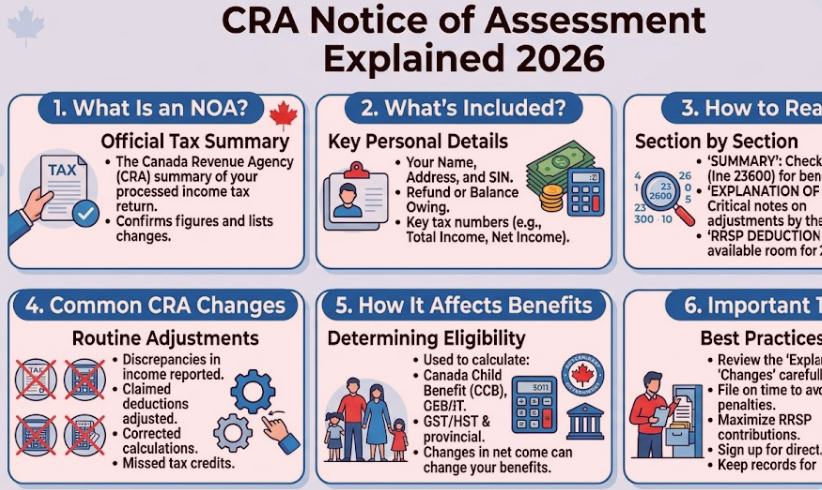
Common Reasons the CRA Changes Your Tax Return
Getting a notice of assessment with changes to it does not necessarily mean that you have made a mistake
There are many common reasons why the Canada Revenue Agency (CRA) makes changes to a tax return.
Here are some of the most common reasons why the CRA might change something:
Their tax slips were not included
Sometimes, their employer, bank, or other organization will forget to give them a tax slip for the CRA. In some cases, the CRA may add this to their income.
Mathematical Errors
Simple calculation mistakes can occur when preparing a tax return.
The CRA may correct these automatically during processing.
Incorrect Tax Credits
If they claim a deduction or credit that they cannot, the CRA will usually remove it. Some of the most common tax claims include:
- Medical expenses
- Tuition fees
- Charitable donations
- Caregiver credits
Supporting documentation may be requested if additional verification is required.
Updated Information from Third Parties
The CRA receives information from employers, financial institutions, and other government agencies.
If this information differs from your return, adjustments may be made before your Notice of Assessment is issued.
If Your Notice of Assessment Is Incorrect – What Do You Do?
Don’t be alarmed if you think there’s an issue with the CRA’s assessment of your return. Just follow these steps:
Compare your return with your notice of assessment
Make sure you compare all income, deductions, and credits that have been entered on your return to the corresponding figures on your notice of assessment to ensure there are no discrepancies or errors. Also, check your tax calculations, the provincial taxes applied, and the credits and deductions that were allowed by the CRA.
Compile supporting documents
Gather documents and receipts to support your claim. These could include things like T4s, T5s, RRSP receipts, medical expense receipts, or charity receipts.
Contact the CRA
If you’re sure there’s a mistake in your assessment,
Contact the CRA for information.
Sometimes an inquiry is all you need.
The CRA can often help resolve issues without the need to formally object or request an assessment.
Submit a reassessment request
If required, ask the CRA to re-evaluate your return. Include all of your supporting documents with your request to ensure no delays occur in processing it.
How Your Notice of Assessment Affects Government Benefits
Your notice of assessment can affect more than just your taxes. It can also impact your eligibility for certain government benefits.
GST/HST Credit
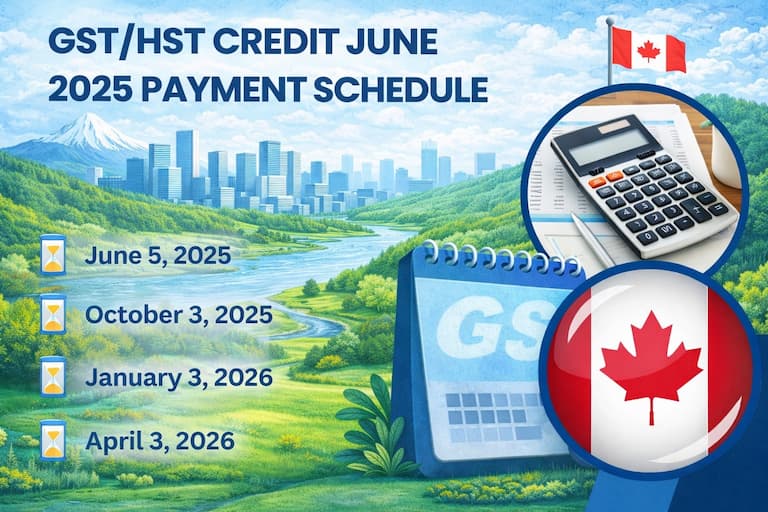
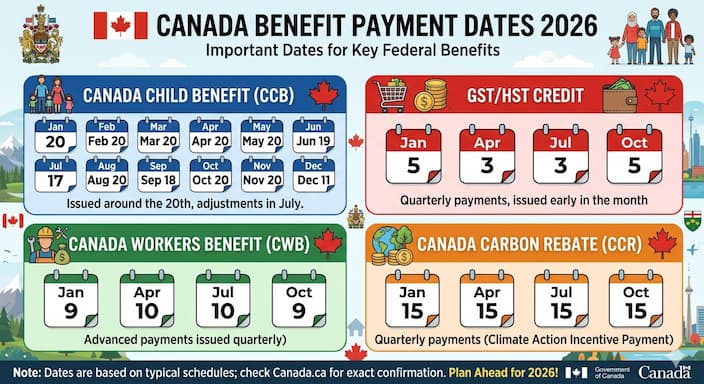
The Canada Revenue Agency (CRA) uses the information on your notice of assessment to determine your eligibility for the GST/HST credit. This means that your assessed family income will dictate whether or not you receive GST/HST payments.
Should your income change substantially, you may experience an increase or decrease in your GST/HST credit amount.
For more information, read our Canada GST/HST Credit Payment Dates 2026 guide.
Canada Child Benefit CCB
Families who receive the Canada Child Benefit need to submit a tax return every year, whether they have any tax to pay or not. You’ll see details on future CCB payments on your CRA Notice of Assessment (NOA).
Learn more in our Canada Child Benefit Payment Dates 2026 guide.
Canada Workers Benefit (CWB)
Notice of Assessment will advise if you qualify for the Canada Workers Benefit if you declared employment and/or family income on this tax return.
Guaranteed Income Supplement (GIS)
If you collect GIS as a senior, make sure to file taxes every year, as the government looks at income yearly to verify if you’re eligible for GIS.
Our Guaranteed Income Supplement (GIS) Eligibility 2026 guide explains how annual income affects GIS payments.
Provincial Benefits
Some provincial benefits also take your assessed income into account.
Examples are:
- Ontario Trillium Benefit
- Alberta Child and Family Benefit
- and other provincial income assistance Programs
Why you should keep your notice of assessment
Many people throw away their Notice of Assessment after reading about their refund.
You may want to keep yours, though, as it is a valuable financial document that you may need in the future.
You might need it to apply for things like:
- Mortgages
- Personal loans
- Student financial aid
- Government assistance
- Rental applications
- Immigration sponsorship
- Income verification
You should keep a digital and/or paper copy of your notice of assessment.
Tips for Protecting Your Notice of Assessment
To protect your tax information, you should do the following:
- Save a digital copy of the notice on a secure website such as CRA MyAccount.
- Save a copy in a secure place.
- If you want a printed copy, you can print one for your records.
- Do not share your Notice of Assessment with anyone.
- Save previous Notices of Assessment for your records.
Keeping good records will help if you have questions about a past tax return.
Frequently Asked Questions
Are the Notice of Assessment and tax return the same thing?
No.
The tax return is the information you send to the CRA.
The Notice of Assessment is the CRA’s version of your return that they calculate after receiving it.
Can I get the Notice of Assessment from the CRA website?
Yes.
Once the CRA has processed the return, you can get and download a Notice of Assessment from your My CRA account.
What happens if I lose the Notice of Assessment?
Most likely, you will get one by signing in to your My CRA account or by contacting the CRA.
How many years should I keep my Notice of Assessment for?
Most of us in tax would advise you to keep it with your records, including those you use to keep your Notice of Assessment for some years for reference if needed later.
Could my return be changed later?
Yes.
If you receive new information or find a mistake in your return, the CRA can recalculate it.
In conclusion
You now know your CRA Notice of Assessment Explained 2026 better. The Notice of Assessment is crucial in the context of your tax filings and government benefits. This notice confirms that the CRA has assessed your tax return, indicates your tax refund or tax amount owing, and includes your contribution room for your registered savings plans (RRSP), your eligibility for government benefits, and much more.
Read your Notice of Assessment carefully to avoid errors, changes to your return by the CRA, your benefit entitlements, and other issues when filing.
Make sure your address is current and update your tax information.
Pingback: CRA Notice of Reassessment Explained 2026: What It Means
Pingback: CRA Mail Delivery Explained: 2026 Guide to CRA Letters
Pingback: How to Replace a Lost or Damaged SIN Card in Canada
Pingback: CRA Processing Times (2026 Update) Explained
Pingback: CRA Processing Times (2026 Update): Refund & Tax Guide
Pingback: Canadian Dental Care Plan 2026: Who Qualifies & Costs
Pingback: TFSA and RRSP Limits 2026: How Much You Can Save
Pingback: GIS Income Limit 2026: Up to $1,138.90 Monthly + Eligibility