
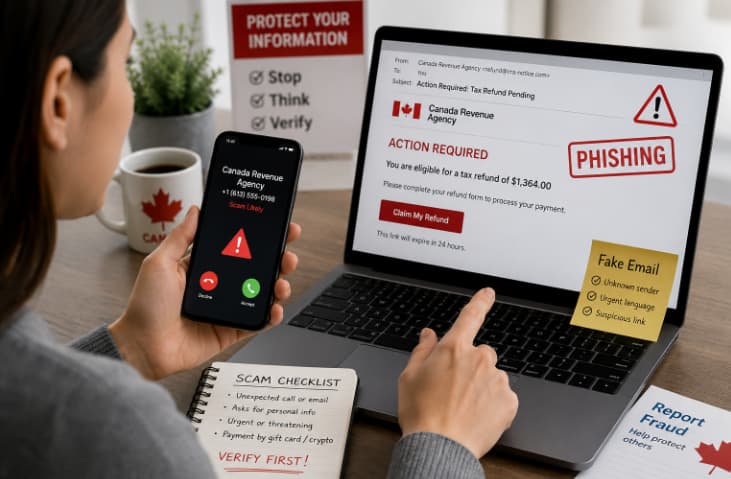
Every year, thousands of Canadians get fake phone calls, emails, text messages, and even letters, that pretend they’re coming from the Canada Revenue Agency (CRA). These scams try to grab personal info, banking details, or actual money by using fear plus a strong sense of urgency. Learning about CRA scam calls and emails: how to spot them can help you stay protected and keep your finances safe.
Scammers usually say you owe taxes, you might qualify for a refund, or that you will face immediate legal action if you don’t respond, right away. Even if the message looks real at first glance, once you understand the way the CRA really reaches out to taxpayers it becomes a lot easier to notice fraud in the moment.
In this guide you’ll go through the warning signs of CRA scams, the way the CRA contacts people, what you should do when you spot a suspicious message, and how to report what happened.
Why CRA scams are so common
The Canada Revenue Agency basically handles income taxes, benefit payments, GST/HST credits, the Canada Child Benefit (CCB), and a bunch of other federal things. Because nearly every Canadian has to deal with the CRA at some point, scammers often pretend to be them.
Their plan is to make the request look real, and they do it by using government logos, email addresses that look normal, fake caller IDs, and a lot of threatening wording. Sometimes the message comes in a way that feels urgent, like you need to act right now.
A lot of these schemes aim to:
- Take your banking details
- Get fake tax payments
- your CRA My Account credentials
- Get your Social Insurance Number (SIN)
- Install malware by leading you to fake links
- Do identity theft
These scams tend to spike during tax season, also around times when benefits are issued or updated.
How the CRA Actually Reaches People
If you understand what real CRA contact looks like, you can spot fraud much faster.
The CRA may reach out to you by:
- Secure messages inside CRA My Account
- Phone calls from CRA staff
- Official mail letters
Emails that just let you know new mail is waiting inside CRA My Account
The CRA may ask a few questions first, to help confirm your identity before they discuss anything about your account.
That said, the CRA will never pressure you into making a payment right away, and they will not threaten arrest in a surprise phone conversation.
CRA Scam Calls and Emails: How to Spot Them: Common Types of CRA Scam Calls
Threatening “Tax Debt” Calls
This is one of those oldest scams, you hear about it all the time.
The person on the line usually says:
- You have unpaid taxes
- The police are on the way to arrest you
- Your passport will get cancelled
- Your bank account will be frozen
- You must pay right now
They’ll often insist you pay using:
- Gift cards
- Cryptocurrency
- Wire transfers
- Prepaid debit cards
Those payment options are big, major warning signs.
Fake Refund Calls
One more scam that comes up a lot says you are getting a big tax refund you “should already have.” Then the scammer starts asking for stuff like:
- Banking information,
- Credit card details,
- Online banking credentials.
The CRA will not call you just to get your banking passwords or anything similar.
Automated Robocalls
A lot of these schemes use recorded messages that say things like “Press 1 immediately” and then they mention all sorts of high pressure topics such as criminal investigations, immigration problems, tax fraud, or even an outstanding balance.
They are aiming to frighten you into answering, then talking to a fake agent.
Caller ID Spoofing
Nowadays scammers can make it look like the call is coming from, Canada Revenue Agency, or Government of Canada, or even Ottawa, or sometimes a local phone number. Still, never rely on caller ID alone.
Common CRA Email Scams
Email scams keep increasing year after year. Common examples are fake tax refunds, benefit payment confirmations, security alerts, login verification requests, and account suspension notices.
Many messages show convincing government logos and branding, which can make it feel official.
CRA Scam Calls and Emails: How to Spot Them: Signs It’s a Fake CRA Email
Watch for these little warning signs, they can look harmless at first, but then you notice.
Urgent language
For example, phrases like:
- Immediate action required
- Final notice
- Account suspended
- Last warning
Scammers really want you to panic.
Suspicious links
Instead of sending you to the real CRA website, fake emails often push you toward pages made to steal usernames and passwords.
Always check the web address carefully before clicking anything.
Weak writing
Many scam messages have things like:
- Spelling mistakes
- Odd wording
- Uncomfortable sentence flow
- Wrong punctuation
Even when a scam is professionally made, grammar issues still show up a lot.
CRA Scam Calls and Emails: How to Spot Them: Unexpected attachments
Don’t open attachments that claim to include:
- Tax statements
- Refund forms
- Benefit confirmations
Attachments can carry malware, so don’t gamble with it.
CRA text message scams
SMS scams have risen a lot. Typical lines you might see include:
- “Your tax refund is waiting.”
- “Confirm your identity.”
- “Benefit payment failed.”
- “Click here to avoid penalties.”
These messages often have shortened links that try to make you not notice the true destination, so the timing is always a bit off, you know.
Never share personal information through text message links you do not recognize.
Social Media Scams
Scammers also work on Facebook, Instagram, WhatsApp, and other platforms.
Examples might look like this:
- Fake CRA pages
- help with benefits applications
- refund offers
- Direct messages saying there is a problem with your account
Always confirm what you’re seeing using official Government of Canada sources.
CRA Scam Calls and Emails: How to Spot Them: Warning Signs That It’s a Scam
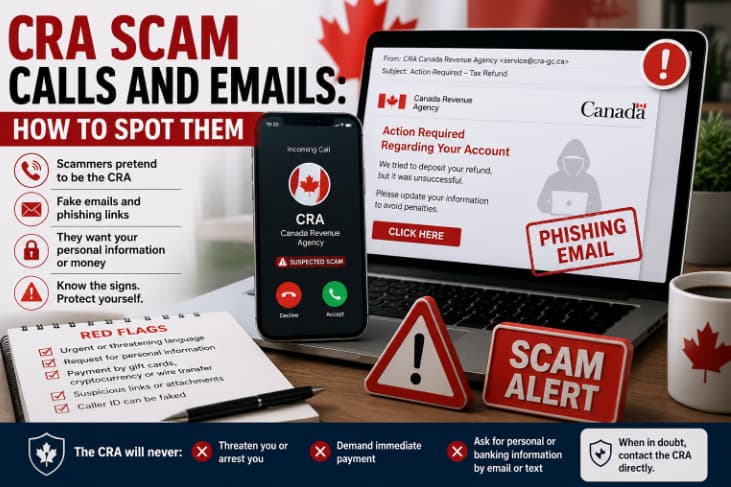
Look for these red flags:
- A demand for payment right away
- Threats of arrest
- Asking for gift card payments
- Requests to pay using cryptocurrency
- High pressure tactics that do not leave you time
- Asking for passwords
- Asking for PIN numbers
- Requests for full banking credentials
- Links that seem out of place
- Strange or suspicious attachments
The more warning signs you spot, the higher the chance the message is a scam.
CRA Scam Calls and Emails: How to Spot Them: How the CRA Requests Payments
When taxes are owed, the CRA can use several real payment options.
These may include:
- Online banking
- Debit payments
- Financial institutions, maybe
- Pre-authorized debit payments
- Online CRA services
The CRA does not ask for payments via gift cards or using cryptocurrency, at all.
If you are not sure which payment options are real and valid, you can also view our guide “How to Pay CRA Online” it goes over secure methods that the CRA actually accepts, so you do not get stuck.
Protecting Your Personal Data
Try these safety tips, ok:
- Turn on multi factor authentication whenever you can.
- Set up strong, unique passphrases.
- Do not share CRA login credentials with anyone.
- Keep all apps and software current.
- Add trusted antivirus protection.
- Try not to use public Wi Fi for financial account access.
- Check your CRA account often, like regularly.
What to do when you get a suspicious call
Take a breath and stay calm.
Do not do any of this:
- Provide personal information
- Confirm your SIN
- Share banking details
- Make any payments
Instead, do the following:
- Hang up first.
- Open CRA My Account on your own.
- See if there is any balance that shows up.
- Reach out to CRA using official contact info.
Do not dial phone numbers that the caller gives you, ever.
What To Do If You Clicked a Scam Link
If you clicked and you already interacted with the scam in any way:
- Change your passwords right away.
- Reach out to your financial institution.
- Keep an eye on your accounts.
- If identity theft happens, report it.
- Run a malware scan on your computer.
- Update your security software as well.
- Quick action can reduce the damage, sometimes a lot.
CRA Scam Calls and Emails: How to Spot Them: How to Report CRA Scams
Reporting scams is helpful because it protects other Canadians too.
You can report suspicious calls emails or text messages to the proper Canadian authorities that handle fraud prevention and cybersecurity. Including useful details like phone numbers email addresses screenshots, and payment requests can help investigators connect the dots and spot new scam waves.
If you already lost money, tell your bank immediately and report the incident as soon as you can.
How CRA My Account Can Improve Security
Using CRA My Account lets you:
- See official notices
- Check account balances
- Track refunds
- Monitor benefit payments
- Review your correspondence in a secure way
Rather than depending on emails, going in directly works as the safest way to check the info, and really confirm you’re seeing the right details.
If you want more security ideas you might also read our article on My Service Canada Account vs CRA My Account, it breaks down how the two government portals differ and how to use each one securely.
Why Seniors Get Targeted More Often
Scammers tend to focus on seniors because they may receive several types of government support.
You’ll often see scams about:
- GIS payments
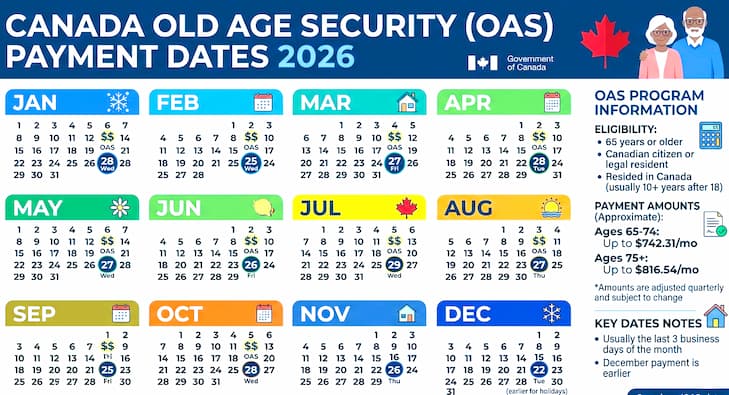
- OAS payments
- CPP benefits
- Tax refunds
Family members should help older adults slow down and verify anything strange, before replying or taking action.
How Businesses Can Reduce Their Risk
Business owners should:
- Have employees learn how to spot phishing messages
- Check any unexpected payment requests
- Limit who can access financial accounts
- Verify changes to banking details through an independent channel
- Keep cybersecurity updates current
- Even smaller companies can become a target.
CRA Scam Calls and Emails: How to Spot Them: Staying safe during tax season
Fraud activity usually increases during:
- Tax filing deadlines
- Refund season
- Benefit payment announcements
- New government program launches
Always take a few extra minutes to verify unexpected communications, before responding.
Final Thoughts
Understanding CRA Scam Calls and Emails: How to Spot Them is one of the best ways to protect yourself from fraud. Scammers keep developing new tactics, but most scams still depend on fear, urgency, and deception. If you catch the common warning signs, verify messages through official CRA channels, and safeguard your personal details, you can reduce the likelihood of becoming a victim quite a lot.
Whenever you get an unexpected phone call, email, or text message that claims to be from the CRA, pause before you respond. Verify the info independently, avoid clicking suspicious links, and do not share sensitive details unless you are sure you are dealing with an official Government of Canada service.

Pingback: What Happens to GIS After a Spouse Dies | 2026