
The Alberta Child and Family Benefit (ACFB) is an important financial assistance program. It helps low and middle-income families support their children in Alberta in a practical way. The benefit brings together a base amount with a working income component, and that’s what makes it possible to deliver tax-free payments across the year.
Lately, living costs keep going up, so a lot of parents are trying to get reliable info about the Alberta Child and Family Benefit 2026. They usually want the payment dates, the eligibility rules, and also what dollar amount they might receive.
The good news is that in most cases, eligible families do not need to fill out a separate application. The government tends to automatically figure out eligibility using your annual tax return, which saves time and some confusion, too.
In this guide, we will cover pretty much everything you need to know about the Alberta Child and Family Benefit 2026, including who qualifies, how much you can receive, payment schedules, and how this benefit works alongside other government supports.
What Is the Alberta Child and Family Benefit (ACFB)?
The Alberta Child and Family Benefit is a tax-free provincial benefit put in place to support families with kids under 18 years old, so it helps them with day-to-day costs.
This program has two main pieces, which is why people sometimes mention it in parts
- Base Component
- Working Income Component
The base part gives support to families with lower income, while the working income component gives extra help to families that have employment income coming in, and that matters a lot.
With these amounts together, many families can cover usual needs like:
- Groceries
- Child care
- School supplies
- Housing expenses
- Transportation
- Clothing
- Healthcare costs
The Alberta government works with the Canada Revenue Agency (CRA) to run the benefit, so it is easier for families who qualify to receive it automatically.
Alberta Child and Family Benefit Payment Dates 2026
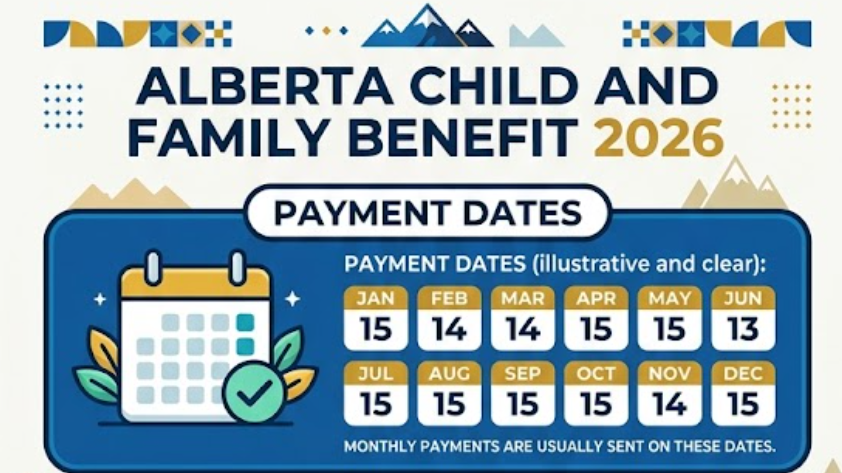
The Alberta government generally sends out ACFB payments four times a year, um… at set intervals.
For 2026, the expected payment months are probably:
- February 2026
- May 2026
- August 2026
- November 2026
If you signed up for direct deposit, then the CRA places the funds right into your bank account.
If you receive paper cheques, delivery might take a little more time than usual.
Because payment dates can move around, it is a good idea to routinely check your CRA account for any new updates and benefit details.
Need help getting into your account? You can review our CRA Login Guide 2026, which explains how to sign in and how to manage your benefit information online.
Who Is Eligible for the Alberta Child and Family Benefit in 2026?
To qualify for the Alberta Child and Family Benefit, you usually have to meet a few things. Maybe not every detail is the same for everyone, but generally:
- You live in Alberta.
- You have at least one child who is under 18 years old.
- File an annual income tax return.
- You meet the income rules.
- Be a Canadian resident for tax purposes.
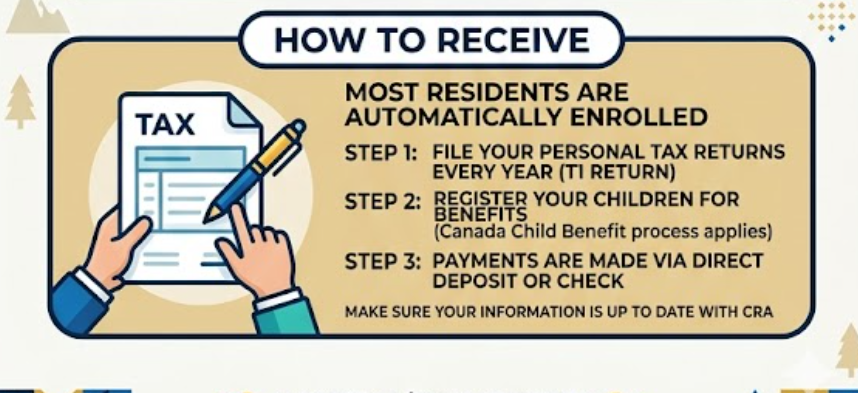
Most times, you do not need to complete a separate application form, at least not in typical situations.
The CRA then figures out if you are eligible automatically based on:
- Your family income
- How many children do you have
- Your marital status
- What shows up in your tax return information
Because of this automatic enrollment, things feel simpler for families, and it helps eligible households receive the benefit without extra paperwork.
Do You Need to Apply for the Alberta Child and Family Benefit?
In most cases, no.
The CRA just figures out your eligibility automatically when you
- File your income tax return.
- Your spouse or common-law partner also files their tax return, if it applies.
- The CRA processes the details it receives.
Still, you should make sure that:
- Your address is up to date,
- Your marital status is correct,
- Your direct deposit information stays current,
- And your kids’ information is accurate.
Keeping your CRA profile updated helps prevent payment delays, even when everything is automatic.
If you recently changed banks, or you want to receive benefits quicker, our CRA Direct Deposit Setup Guide 2026 explains how to update your banking details.
How Much Can You Receive Through the Alberta Child and Family Benefit?
How much you receive depends on:
- Family income
- Number of children
- Employment income
- Marital status
- Eligibility for the working income component
In general, families with
- Lower incomes end up with larger benefits, and yes, that’s frequent.
- More children tend to qualify for higher payments.
- Employment income can also affect eligibility for certain parts of the benefit.
The Alberta government reviews benefit amounts often and can change them so they reflect inflation.
Because each family’s financial situation is different, your payment amount can end up different than someone else’s.
Base Component of the Alberta Child and Family Benefit
The base component gives backing to lower-income households regardless if parents are at work or not.
It aims to help pay for daily costs tied to raising children, steadily and predictably.
People commonly use the benefit for things like:
- Grocery bills and pantry needs
- Utility expenses like heating or electricity
- Children’s clothing and shoes
- School expenses, supplies, and fees
- Transportation costs for getting around
- Sports and extracurricular activities, lessons too
The total amount usually goes up as the number of eligible children increases.
Working Income Component
The working income component gives more help to families that have earnings from employment, like steady income from a job.
It really pushes workforce participation, but at the same time, it gives a little extra financial support.
Families may qualify if they:
- Have employment income
- Their income sits inside the eligible range
- They satisfy residency requirements
- They also have dependent children
The working income component gradually loses its amount as family income increases.
Does Family Income Affect the Benefit?
Yes.
Family income is one of the most important factors in determining:
- Eligibility
- Benefit amount
- Base component
- Working income component
The CRA uses:
- Net family income
- Marital status
- Tax return information
to calculate your benefits.
If your family income increases significantly, your benefit payments may decrease.
Similarly, lower-income families generally receive higher payments.
What Counts as Family Income?
Family income generally includes things like:
- Employment income
- Self-employment income
- Pension income
- Investment income
- Taxable benefits
- And certain government payments
The CRA gathers income details from:
- You
- and your spouse or common law partner
to figure out eligibility
Since income changes every year, your ACFB payments might shift too.
What Happens If Your Income Changes?
A big change, like an increase or decrease in income, might influence:
- Amounts you will pay later
- Whether you qualify
- Work-related income benefits
- Total tax credits
The CRA reviews your tax return every year and then recalculates benefits based on that.
When your income drops, you could end up eligible for bigger payments.
If your income goes up, the payment level may go down gradually.
Can Single Parents Receive the Alberta Child and Family Benefit?
Absolutely.
Single-parent households could qualify if they
- Live in Alberta
- Have dependent children who are under 18
- File annual tax returns
- Meet the income requirements
In practice, lots of single-parent families depend on the Alberta Child and Family Benefit to help with managing
- Housing expenses
- Childcare costs
- Groceries
- School fees
- Transportation
What you receive depends on your personal financial situation.
Can New Immigrants Receive the Alberta Child and Family Benefit?
In many cases, yes.
New immigrants might qualify if they,
- Live in Alberta
- Have eligible children
- Meet the residency requirements, as needed
- File tax returns
Also, they should register for child and family benefits when it is required.
New residents should double-check that their immigration information is updated, because their children’s details are also correct. And the CRA account information has to be accurate, no missing numbers, no outdated records.
This helps prevent delays with benefit payments later on.
How Is the Alberta Child and Family Benefit Different From the Canada Child Benefit?
Many parents confuse the Alberta Child and Family Benefit (ACFB) with the Canada Child Benefit (CCB), and it happens a lot
Even though both help families with kids, they are not the same program
Alberta Child and Family Benefit
- This is a provincial program
- It is available to Alberta residents
- Payments are made quarterly
- It includes a base part and also a working income component
Canada Child Benefit
- This one is federal
- You can receive it across Canada
- It is paid monthly
- It depends on family income plus the number of children
Eligible families can receive both benefits at the same time
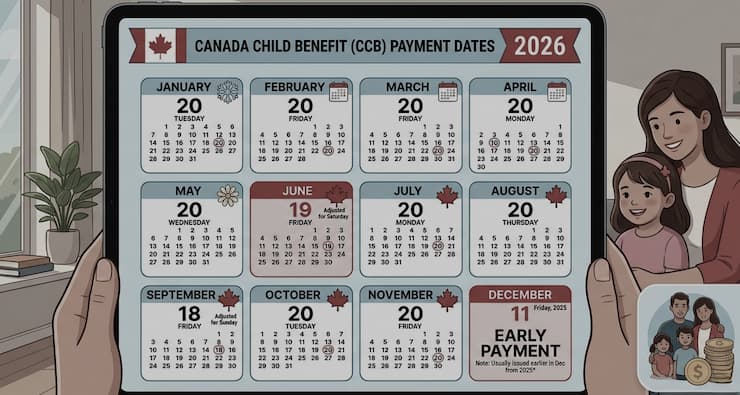
If you want more details about federal child benefits, check out our Canada Child Benefit Payment Dates 2026 guide. It covers the payment timeline and eligibility requirements clearly.
Can You Receive Other Benefits Alongside the Alberta Child and Family Benefit?
Sure, receiving the Alberta Child and Family Benefit usually does not stop you from getting other federal or provincial benefits. In many cases, families still end up with a few extra supports, like:
- Canada Child Benefit (CCB)
- GST/HST Credit
- Canada Dental Benefit
- Canada Housing Benefit
- Canada Child Disability Benefit
When you combine more than one program, it can really boost household finances.
For instance, eligible families may also be able to access the Canada GST/HST Credit Payment Dates 2026. That program gives tax-free quarterly payments, designed to help balance out sales taxes.
Likewise, low-income renters might feel a stronger impact from our guide on Canada Housing Benefit 2026, which covers who qualifies, plus payment details and the usual timelines.
What If Your Alberta Child and Family Benefit Payment Is Missing?
If you don’t receive an expected payment, first check:
1. Tax Return Status
Make sure:
- You filed your tax return.
- Your spouse filed their return.
- The CRA processed both returns.
2. Banking Information
Verify:
- Direct deposit details
- Bank account number
- Transit number
- Account status
Incorrect banking information is one of the most common causes of payment delays.
If necessary, follow our CRA Direct Deposit Setup Guide 2026 to update your account.
3. CRA Account Messages
Your CRA account may contain:
- Notices
- Payment updates
- Requests for information
- Eligibility reviews
You can access these messages online.
If you’re unable to log in, our CRA Login Problems 2026 article covers common login issues and solutions.
Tips to Maximize Your Benefits
To make sure you get every available benefit:
File your taxes every year
Even if you have very little or no income, filing still matters.
The CRA uses your tax return to figure out:
- Alberta Child and Family Benefit
- Canada Child Benefit
- GST/HST Credit
- Housing supports
- Provincial tax credits
Keep your info updated
Tell the CRA if you:
- Change your address
- Change banks
- Get married
- Separate from your spouse
- Have a new child
Having the correct details helps stop delays.
Register for direct deposit
Direct deposit gives you:
- Quicker payments
- Stronger security
- Automatic deposits
- Lower chance of lost cheques
Check other family supports
A lot of families can access extra help programs.
You may also want to look at:
- Canada Child Benefit Payment Dates 2026
- Canada Child Disability Benefit 2026
- Canada Housing Benefit 2026
- Canada Dental Benefit 2026
- Canada Benefit Payment Dates 2026
These guides lay out other programs that could help your family lower costs and improve financial steadiness, in general, maybe not all at once.
Frequently Asked Questions
Is the Alberta Child and Family Benefit Taxable?
No.
The Alberta Child and Family Benefit is a tax-free benefit.
You do not need to include it as taxable income on your tax return.
Do I Need to Submit an Application?
In most cases, no.
The CRA automatically determines eligibility based on your tax return.
How Often Are Payments Made?
The Alberta Child and Family Benefit is generally paid four times a year.
Payments are usually issued in:
- February
- May
- August
- November
Can I Receive ACFB and CCB Together?
Yes.
Many families receive both:
- Alberta Child and Family Benefit
- Canada Child Benefit
The programs operate independently.
What Happens If I Move Out of Alberta?
If you move to another province, your eligibility for the Alberta Child and Family Benefit may end.
You may become eligible for benefits offered by your new province.
Final Thoughts
The Alberta Child and Family Benefit 2026 still feels like an important source of financial support for families raising children in Alberta.
Since the program mixes a base amount with a working income component, it can support lower-income families as well as households that are earning. In that way, it helps with the rising costs for childcare, groceries, housing, and the daily expenses everyone notices.
The best part is that most families who qualify do not need to do a separate application. If you file your taxes every year and keep your CRA details updated, you can make sure you actually receive the benefits you are owed.
If you’re raising children in Alberta, getting a clearer idea of the Alberta Child and Family Benefit, plus other related supports, can end up making a real difference in your family’s overall financial comfort.

Pingback: How to Change Address With CRA in 2026: Online, Phone & Mail