If you’ve been putting off a dental visit because of the bill, this one is worth five minutes of your time. The Canadian Dental Care Plan 2026 is now open to eligible Canadians of every age, and it can cover anywhere from part to all of your dental costs, depending on your family income. Here’s exactly who qualifies, what you’ll pay, what’s covered, and how to apply without getting tripped up by the fine print.
The Short Version
You can apply for the Canadian Dental Care Plan (CDCP) if you meet all four of these:
- You have no access to private dental insurance (through an employer, a spouse or parent, or a plan you bought yourself)
- Your adjusted family net income is under $90,000
- You’re a resident of Canada for tax purposes
- You’ve filed your tax return (and your spouse or common-law partner has too, if you have one)
The current benefit year runs from July 1, 2026 to June 30, 2027. Over 6.5 million Canadians have been approved so far, and the plan saves eligible members roughly $900 a year on average.
What Is the Canadian Dental Care Plan 2026?
The CDCP is a federal program that helps people in Canada pay for dental care. It isn’t free dental care for everyone, and it isn’t a replacement for private insurance. It’s a subsidy: the government pays a set percentage of the plan’s established fees for covered services, and you pay the rest based on your income.
The big change this year is that the plan is no longer limited by age. Seniors were first in, then children and people with disabilities, then adults 18 to 64. As of the 2026-27 benefit year, any eligible resident can apply. Claims are handled through Sun Life on behalf of the government, and you visit a participating dental provider like you normally would.
What Will You Pay? The Three Income Tiers
Your cost depends on your adjusted family net income, which is your family’s total income minus certain government benefits, taken from your most recent tax return. There are three tiers:
| Adjusted Family Net Income | Plan Pays | You Pay (Co-payment) |
|---|---|---|
| Under $70,000 | 100% | 0% |
| $70,000 to $79,999 | 60% | 40% |
| $80,000 to $89,999 | 40% | 60% |
| $90,000 or more | Not eligible | Full cost |
Notice the cliffs. Crossing $70,000 or $80,000 by even a dollar moves you into a higher co-payment tier, so it’s worth knowing exactly where your income lands on your Notice of Assessment. If you’re unsure how to find that figure, see our guide to the CRA Notice of Assessment explained.
The Catch Most People Miss: Established Fees
The percentages apply to the CDCP’s established fee for each service, not necessarily what your dentist charges. If your provider charges more than the established fee, you pay the difference on top of your co-payment.
Here’s a quick example. Say the established fee for a service is $200:
- Under $70,000: the plan pays the full $200. If your dentist charges $250, you pay the extra $50.
- $70,000 to $79,999: you pay 40% of $200, which is $80. If your dentist charges $250, you pay $130.
- $80,000 to $89,999: you pay 60% of $200, which is $120. If your dentist charges $250, you pay $170.
Before you book, it’s worth asking your dentist whether they charge the CDCP fee or more, so there are no surprises at the front desk.
What’s Covered (and What Isn’t)
Coverage spans the basics most people need, including:
- Preventive care: exams, cleanings, and x-rays
- Restorative care: fillings and similar basic treatment
- More complex services: items like crowns and root canals, which can fall under higher-cost categories and may need pre-approval
There are limits, and this is where people get caught out:
- Dental implants aren’t covered, barring an exceptional medical case backed by a specialist.
- The plan sets its own schedule for things like cleanings. If you book more often than the plan allows, the extra visit comes out of your own pocket.
- Some procedures require pre-authorization before treatment, so ask your provider to check first for anything expensive.
For the exact list of covered services and frequency limits, the official benefit guides on canada.ca/dental are the source to trust, since they’re updated each year.
How to Apply for the Canadian Dental Care Plan 2026
You can apply online, by phone, or in person. The online route is fastest:
- Confirm you meet all four requirements listed above.
- Have your information ready: your Social Insurance Number, date of birth, full name, home and mailing address, and details of any dental coverage you already get through a government social program. Your latest tax return and Notice of Assessment are useful to have nearby too. You’ll need the same details for your spouse or partner and any dependants.
- Sign in to My Service Canada Account (MSCA), go to the “Canadian Dental Care Plan” section, and select “Apply for Canadian Dental Care Plan coverage.” If you don’t have an account yet, our comparison of My Service Canada Account vs CRA My Account explains which portal does what.
- Or apply by phone at 1-833-537-4342. If you’re applying on behalf of someone else, you have to apply by phone.
- Wait for your confirmation letter. It gives your coverage start date and your co-payment level. Don’t book treatment until you have it.
New applicants can apply at any time. There’s no hard cutoff date for a first-time application, though your coverage only starts once you’re approved.
Renewal: Don’t Let Your Coverage Lapse
If you’re already enrolled, you have to renew every year. This year’s renewal window ran from April 15 to June 1. Members who missed it saw their coverage end on June 30, and any dental work done during the gap isn’t reimbursed retroactively. If that’s you, you can still enrol again by submitting a new application.
Renewal is tied to your latest tax return, since that’s what resets your income tier. That’s one more reason to file every year, even if you have little or no income. Expect the next renewal window to open in spring, and keep an eye on your My Service Canada Account for the notice.
Why Your Tax Return Decides Everything
Your CDCP eligibility and your co-payment level both come straight from your tax filing. No return means no coverage, and an income change between years can move you to a different tier. To keep your file clean, make sure your CRA details are current: see our guides on updating your address with the CRA and how to manage everything in CRA My Account 2026.
Other Benefits Worth Checking Alongside the CDCP
If your income qualifies you for the CDCP, you may also qualify for other support that helps with day-to-day costs:
- The Canada Groceries and Essentials Benefit (CGEB) 2026, which replaced the GST/HST Credit with a permanently higher quarterly payment
- The Canada Workers Benefit (CWB), which pays advance instalments to low-income workers
- The CRA Disability Tax Credit, if you or a family member lives with a qualifying disability
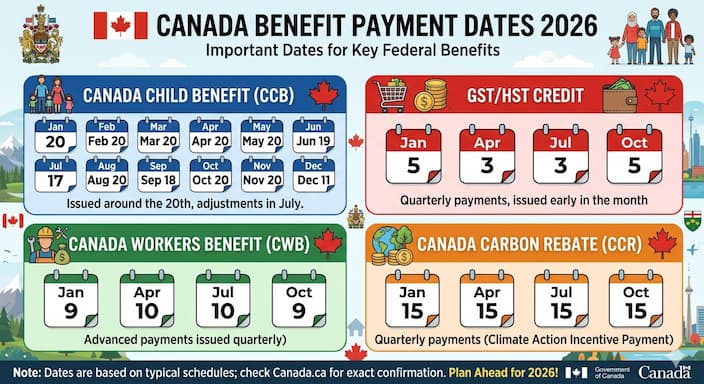
For the full calendar of what’s landing in your account each month, see our Canada Benefit Payment Dates 2026 guide.
Conclusion
The Canadian Dental Care Plan 2026 is one of the most valuable programs available to Canadians without private dental insurance, especially if your family income sits under $70,000. Confirm your eligibility, apply through My Service Canada Account, wait for your confirmation letter before booking, and renew on time every spring. A few minutes of paperwork can save you hundreds of dollars a year.
Frequently Asked Questions
Who is eligible for the Canadian Dental Care Plan 2026?
Canadian residents with an adjusted family net income under $90,000, no access to private dental insurance, and a filed tax return. As of the 2026-27 benefit year, the plan is open to all eligible ages.
Is the Canadian Dental Care Plan free?
It’s free only for covered services if your adjusted family net income is under $70,000. Between $70,000 and $79,999 you pay a 40% co-payment, and between $80,000 and $89,999 you pay 60%. You may also owe the difference if your dentist charges more than the plan’s established fee.
What is the income limit for the CDCP?
Your adjusted family net income must be under $90,000. At $90,000 or above, you aren’t eligible.
How do I apply for the Canadian Dental Care Plan?
Apply online through My Service Canada Account, by phone at 1-833-537-4342, or in person at a Service Canada office. Have your SIN, date of birth, address, and tax information ready.
Is there a deadline to apply for the CDCP?
There’s no fixed deadline for new applicants. Existing members, however, must renew each year, and the 2026 renewal window closed June 1.
What happens if I miss my CDCP renewal?
Your coverage ends on June 30, and dental care received during the gap isn’t reimbursed retroactively. You can still re-enrol by submitting a new application.
Does the CDCP cover dental implants?
No, implants aren’t covered except in an exceptional medical case backed by a specialist.
Can I have the CDCP if my employer offers dental benefits?
No. Access to private dental insurance, including through an employer, spouse, or parent, makes you ineligible.
This article is for informational purposes only. Fee schedules, coverage rules, and dates can change, so confirm current details at canada.ca/dental before you book treatment.
Stay updated with the latest Canada government benefits, payment dates, and CRA news — explore more guides at Benefits Pulse Hub.