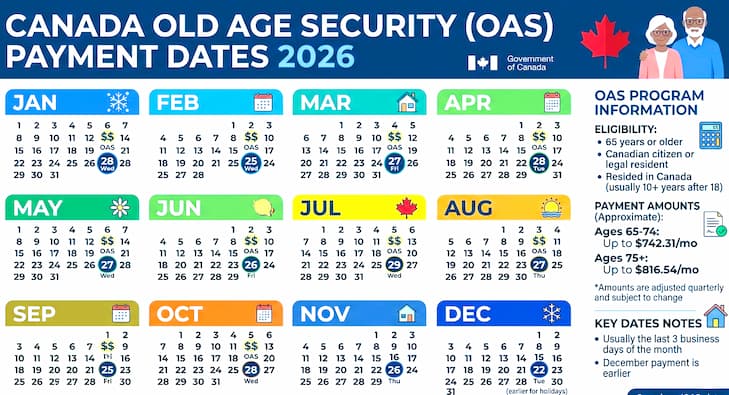
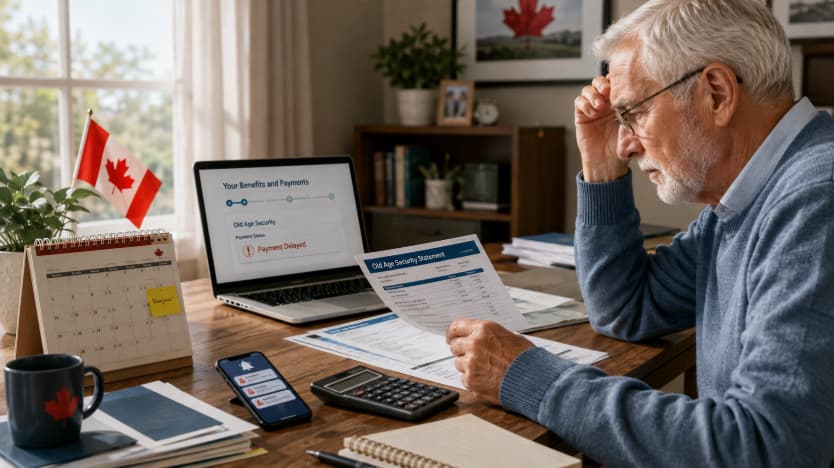
Old Age Security , or OAS, is one of Canada’s most important retirement benefits, it sends monthly money to eligible seniors who are 65 years and older. For many Canadians, these OAS payments make it easier to handle daily costs like housing, groceries, medical expenses, and other necessary life expenses. Still, when the payments don’t show up when they should, many seniors feel a lot of financial stress and worry. Learning about OAS Payment Delays Explained can help retirees figure out common causes behind late transfers, understand what to do when something goes wrong, and plan so their benefits keep flowing without annoying interruptions.
Even so, some seniors hit unexpected delays when they are waiting on their OAS. Those slowdowns can become a real pressure point, particularly for retirees who rely on government benefits as a major income source.
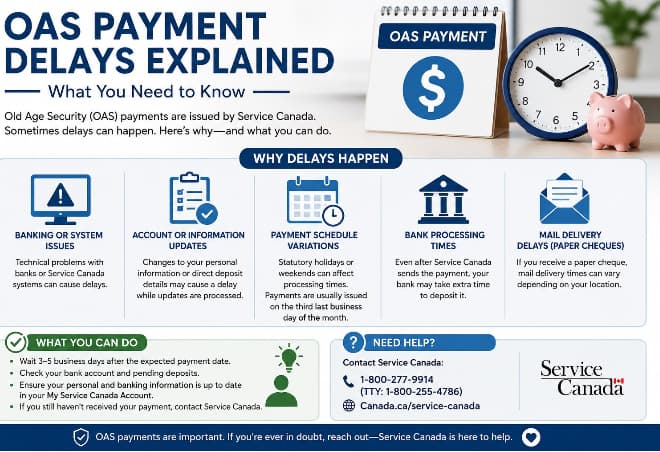
This is why understanding OAS payment delays explained really matters. Delays can appear for a few different reasons, for example longer application processing times, missing paperwork or information, problems with banking details, identity verification needs, and updates or changes to personal details.
When seniors know what might be causing the delay, and what to do next, they are more likely to get their benefits as soon as possible.
If seniors are unsure about their benefit eligibility, they may also want to read our guide called How to Apply for Old Age Security (OAS) , so they can follow the application steps and the needed requirements.
What Is Old Age Security (OAS)?
Old Age Security is a monthly payment provided by the Government of Canada for eligible older adults. In contrast to the Canada Pension Plan (CPP), OAS is not tied to employment history or contributions.
Eligibility for OAS is usually shaped by:
- Age
- Canadian residency time
- Legal standing in Canada
- Income conditions, mainly for higher-income seniors
Most people who qualify receive OAS automatically, but certain individuals might have to submit an application themselves.
If a payment is delayed, it is typically not because the benefit was cancelled. In most situations, the pause happens because extra processing, or checks, are still being completed.
OAS Payment Delays Explained: Common reasons for OAS payment delays
Delays in OAS application processing
One of the main reasons for delayed OAS payments is that the application is still being processed, even if it was submitted already.
Lots of seniors are automatically enrolled, but not everyone gets that, so some have to submit an application. Processing might go slower when:
- The application info looks incomplete
- Supporting documents are missing
- Extra eligibility checks are needed
- Service Canada gets a big volume of applications at the same time
People who recently applied should keep checking their application status using their online account. If the waiting time drags on more than expected, contact Service Canada directly, they can confirm what is happening.
Readers waiting for approval can learn more through our article about How to Check OAS Application Status in 2026 for steps to monitor their benefit progress.
Missing or Incorrect personal information
Wrong personal details can make OAS payments take longer.
Typical issues include:
- An incorrect mailing address
- Outdated banking information
- Citizenship documents that are missing
- Incorrect date of birth, in some cases
- Name differences in government files
Service Canada uses personal information to confirm you are eligible, and to process payments. If details do not line up with what is already on file, then an extra review might be needed, maybe more paperwork too.
Seniors should double check that their personal details are current, whenever something changes. Like name, address, or other identifier bits that can get out of date.
Problems with banking information
A lot of Canadians get OAS payments by direct deposit because it is faster, and more dependable than mailing cheques.
Still, banking issues sometimes end up causing delays in payment timing.
Common examples include:
- Closing a bank account and not updating Service Canada right away
- Putting in wrong banking details
- Moving to a different financial institution
- Direct deposit information not processing properly
If a senior recently switched banks they should update their banking info as soon as possible, so payments are not missed.
Seniors who need assistance updating payment details can read our guide on How to Change Banking Information with CRA.
Identity Verification Needs
Government programs need exact identity checks, so Canadians are protected from fraud.
At times, OAS payments may stall a bit because Service Canada asks for extra papers or extra confirmation.
This verification can include:
- Proof of identity
- Residency records
- Citizenship documents
- More personal details
Even if it feels inconvenient, the process still supports the idea that benefits are issued to the right people.
Seniors should answer quickly to any requests coming from Service Canada, to help avoid longer delays.
Delays Caused by Residency Review
OAS eligibility depends on residency history, not just one factor.
Some seniors may run into slowdowns if Service Canada must confirm
- Years lived in Canada
- International residence details
- Immigration records
- Citizenship status
This is especially common among seniors who,
- Moved to Canada later in life
- Lived outside Canada for extended periods,
- Worked internationally
Providing accurate residency details can help speed up the review process.
Tax information concerns
OAS payments connect to what is reported through yearly tax filings.
Issues can show up when:
- Income tax returns are not filed
- Personal information on tax records is out of date
- Government records cannot match the details properly
Even if OAS itself is not tied to employment income directly, the tax information can still influence certain parts of retirement benefits including the OAS recovery tax for higher-income seniors.
Keeping tax information updated, helps prevent unnecessary administrative delays.
Lots of applications and government processing times
At certain times, Service Canada may see more applications and requests than usual.
Periods with increased demand may include:
- Beginning of the year
- Tax season
- Periods with government program updates , or when processing is being adjusted
- Times when many seniors reach eligibility age
During these stretches , processing times can feel longer than usual, sometimes it’s just paperwork backlogs
Seniors should apply early if they can , and keep copies of every submitted document for their own records
OAS Payment Delays Explained: How Long Can an OAS Payment Delay Last ?
That length depends on why the delay happens in the first place
With simpler issues , like banking details that were entered incorrectly , things may be corrected fairly fast once the update is received
With more complex situations, such as residency verification , or documents that are missing, it may take longer, sometimes weeks
A good approach is this:
- Keep an eye on the application status often
- Reply quickly when government requests are sent out
- Make sure personal information stays current
- Contact Service Canada when needed
OAS Payment Delays Explained: How to Fix OAS Payment Delays
When OAS money comes in late, seniors should take a careful, step by step approach to figure out why it happened and then correct it. A lot of the time these delays can be fixed by updating details, supplying what’s missing, or confirming the application facts are accurate. Sometimes even a small change in personal info causes a delay. so it helps to act methodically.
Here are a few practical steps seniors can use to handle delayed Old Age Security payments.
Check Your OAS Application or Payment Status
First, confirm if the delay is tied to an application matter, or if it’s happening with an existing benefit payment.
Seniors can look over their benefit records using their online government account, and check things like:
- Application progress
- Payment details
- Personal information
- Benefit notices
- Any requests for extra documents
Checking the status from time to time can make it easier to spot issues early. It can also reduce the amount of unnecessary waiting.
Seniors who want to make sense of online government services can also check our guide on My Service Canada Account vs CRA My Account, to see which account goes with which benefit services.
Update Personal Information Immediately
Keeping your personal information current is one of the easiest ways to dodge OAS payment delays.
Seniors should update Service Canada the moment there is a change in:
- Address
- Phone number
- Marital status
- Banking information
- Citizenship status
Outdated details can create verification headaches and can slow down benefit processing.
Going through government records regularly can help make sure payments continue without interruption.
OAS Payment Delays Explained: Submit Missing Documents Quickly
If Service Canada asks for extra documents, seniors should send them in as soon as possible.
Commonly requested documents may include:
- Proof of Canadian residency
- Citizenship documents
- Immigration records
- Identification documents
- Additional application information
A delay in turning in your documents can end up stretching the whole payment processing timeline out, more than people expect.
Also, keeping your retirement paperwork in a reasonable order makes it easier to reply quickly when more details are needed.
Contact Service Canada About Payments That Are Late
If an OAS payment has not shown up , and there is no obvious reason, seniors should reach out to Service Canada.
Before you contact them , it can help to have ready:
- Social Insurance Number (SIN)
- Date of birth
- Current address
- Application details
- Payment information
- Any letters or notices you got
When you have those items on hand, the conversation tends to move along faster and with less back and forth.
Confirm Your Direct Deposit Details
Direct deposit is the preferred payment approach for many Canadian seniors, because it reduces waiting times tied to mailed cheques.
That said, seniors should double check that their banking records are correct.
Some common banking slipups are like, using the wrong account number, putting an incorrect transit number, and even keeping a closed bank account. Another issue is not updating the information after switching banks
It can help to review those banking details now and then so missed OAS payments are less likely.
OAS Payment Delays After Moving
When you move to a new place it can trigger administrative slowdowns if government records stay unchanged.
Seniors should update their address after moving. Important notices about benefits can be sent by mail and if the address is old, those items may not arrive in time.
Also, if a letter asking for information is missed, payments can get delayed.
Keeping Service Canada in the loop when address changes happen helps keep benefit communication steady.
OAS Payment Delays for Seniors Living Outside Canada
Some Canadian seniors who live abroad might see their payments slow down, sometimes because extra eligibility reviews are done, and yeah it can take longer than expected.
Depending on the situation internationally, you may need verification for a few items like, Canadian residency history, your citizenship status, a foreign address record and then the international banking details.
If a senior spends a significant amount of time outside Canada, they should make sure Service Canada has the correct information, otherwise the process can drag.
Seniors living internationally may also benefit from reading OAS Eligibility Requirements Explained to better understand residency rules.
Common Mistakes That Can Cause OAS Delays
Many delays with payments can be prevented by avoiding frequent errors.
Applying Too Late
Seniors who are approaching age 65 should know when they need to apply, and which documents may be required.
Not Checking Government Messages
Service Canada may send important requests, and you usually have to reply. If notifications get ignored, payments can be delayed.
Not Updating Banking Information
Changing a bank account and not updating the government records can lead to direct deposits getting interrupted for a bit, maybe longer than you expect.
Missing tax filings
If you do not file the tax returns that are needed, that can complicate how benefits are administered, and it may trigger delays.
Ignoring personal information changes
If your address changes, your marital status changes, or your residency situation changes, those updates should be shared promptly with the proper office.
Difference Between OAS delay and OAS suspension
An OAS payment that comes late does not always mean the benefit is stopped. Usually a delay means the payment is being held temporarily while an issue gets reviewed. A suspension is more likely when the following happens:
- You no longer meet the eligibility requirements
- Required information has not been provided
- Government records need to be confirmed
Seniors should contact Service Canada if they think their OAS payment has been suspended by mistake.
Frequently Asked Questions about OAS payment delays
Why is my OAS payment delayed?
OAS payments, may be delayed for a bunch of reasons like the application getting processed slowly, documents missing, personal details being entered wrong, banking problems, residency checks taking longer, or simply government processing timelines.
How can I check my OAS payment status
You can look up your OAS status using your online government account, or you can call Service Canada and ask for help.
Can incorrect banking information delay OAS payments?
Yes. If your banking details are incorrect or not updated, the direct deposit may not go through the way it should.
Does moving affect OAS payments?
Moving does not usually stop your OAS benefits, but not updating your address can cause delays in how messages are delivered and how requests get handled.
What should I do if my OAS payment does not arrive?
First, check your payment information, then review any government messages you received, next confirm your banking details are accurate, and if nothing changes contact Service Canada.
Final Thoughts
Getting a handle on OAS Payment Delays Explained can help Canadian seniors spot issues quicker and then take the right steps so payments come back on track.
A lot of the delays happen because of administrative issues, not because someone lost eligibility. Things like missing documents, personal details that are out of date, banking mistakes, and residency reviews are among the usual reasons a payment can be held up.
Seniors can lower the chance of interruptions by keeping their records current, filing taxes before the due date, keeping an eye on benefit updates, and replying promptly when the government asks for something.
OAS provides significant financial support during retirement , and when seniors stay informed about how the payment process works, they are more likely to keep reliable access to their benefits.