
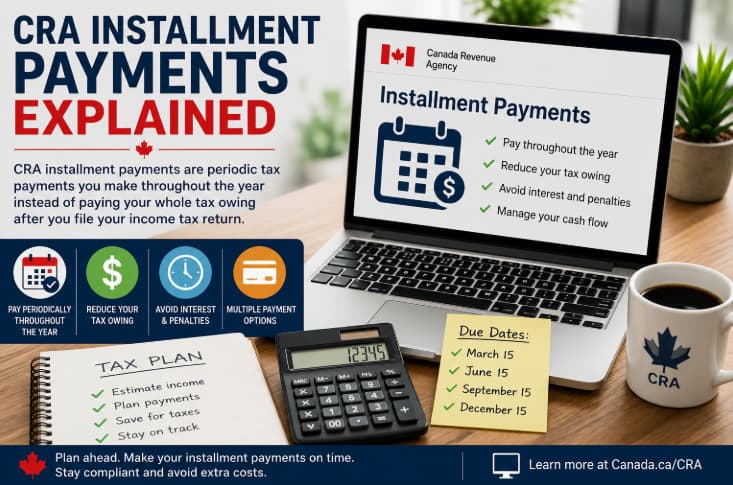
CRA Installment Payments Explained: Paying your income taxes in a single lump sum can feel hard, especially when taxes aren’t automatically taken off your income. The Canada Revenue Agency (CRA) may ask eligible taxpayers to send installment payments across the year, so the big tax balance at filing time is smaller. If you’re self employed, earn rental or investment income, or you often end up owing taxes, this guide will walk you through who has to pay, how those installments are figured out, the important due dates, and what you can do to prevent interest and penalties.
If you got a CRA installment reminder, or you’re trying to figure out whether installment payments apply to you, it can really help to understand how this system behaves. It can help you prevent interest charges and also keep your cash flow calmer.
This guide walks through what CRA installment payments are, who has to do them, how the amounts get figured out, the payment options, the due dates, and what occurs if you miss a payment.
What Are CRA Installment Payments?
CRA Installment Payments Explained are those periodic tax remittances that eligible taxpayers make across the year, rather than paying the entire tax owing after they file their income tax return. In other words it breaks the total amount into smaller parts, and it helps people manage timing and cash flow a little better, when compared to waiting until the final filing is done.
Rather than waiting till the annual tax filing deadline, some eligible taxpayers pay a piece of their expected tax ahead of time. These amounts are then applied, credited to your tax account, and they reduce what you owe when you finally file your return.
Installments are usually needed for people whose taxes are not fully withheld from their income.
Why Does the CRA Ask for Installment Payments?
The installment system helps make sure taxes get collected across the year, rather than as one big payment at the end.
That helps both taxpayers and the CRA because it:
- Cuts down on huge year-end tax bills
- Helps budgeting and cash flow
- Reduces the chance of big interest charges
- Keeps tax payments aligned as income is earned
For a lot of self-employed Canadians, installment payments end up being a steady element in financial planning.
Who Needs to Make CRA Installment Payments?
Not everyone has to pay in this way.
Usually, the CRA can require installment payments if:
- You owe more than the CRA’s installment threshold when it comes time to file.
- You also owed more than that threshold in earlier years.
- Basically your tax picture points to recurring amounts owing.
People who often receive income but do not get enough tax deductions taken off usually include:
- Self-employed individuals
- Freelancers
- Independent contractors
- Landlords who earn rental income
- Investors with major investment income
- People receiving foreign income
- Pensioners with little or no tax withheld
The CRA will often send an installment reminder if you are expected to pay.
CRA Installment Payments Explained: How Does the CRA figure installment payments?
The CRA generally figures the installment amounts using details from your prior tax returns. There can be multiple calculation choices, and it depends on your situation, including:
No-Calculation Option
The CRA proposes the installment amounts using your taxes from last year.
This is the most straightforward path for taxpayers whose income stays pretty steady, year to year.
Prior-Year Option
You figure out your installments using last year’s real tax balance or liability, you know the actual stuff.
Current-Year Option
If your income is expected to drop a lot, you can instead calculate installments using what you think your current-year taxes will be.
This method might lower unnecessary overpayments, which is kind of the point.
But if your numbers end up too low, installment interest may apply, later on.
CRA Installment Payments Explained: When Are CRA Installment Payments Due?
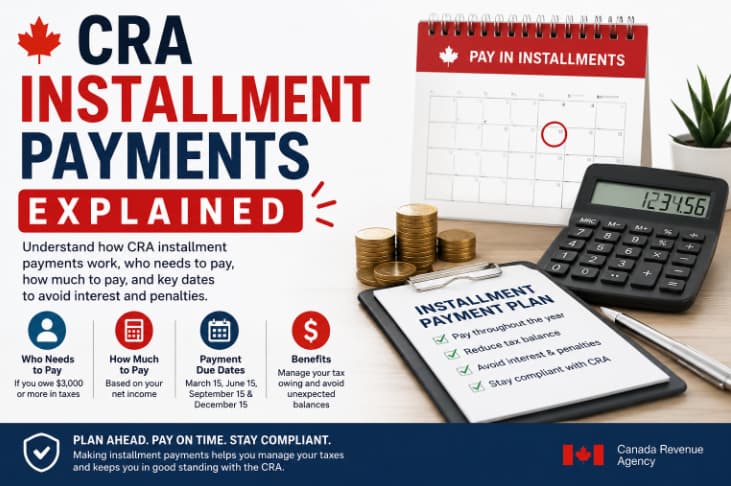
For most individuals, the installment payments are due 4 times during the year.
You’ll usually see these target days:
- March 15
- June 15
- September 15
- December 15
If one of those dates lands on a weekend or a public holiday, the CRA generally accepts the payment on the next business day.
Please double check the latest deadlines before you send anything.
CRA Installment Payments Explained: How Much Should You Pay?
The amount depends on your tax setup.
Some things that matter are:
Previous year tax owing
- Expected income
- Available tax credits
- Income tax already withheld at source
- Estimated deductions
Taxpayers who follow the CRA’s suggested amounts generally sidestep installment interest if they pay on time, and everything matches the schedule.
How to Pay CRA Installment Payments
The CRA provides a few easy ways to handle these payments.
You can send instalments using:
Online Banking
Most Canadian banks and credit unions let you pay in instalments by adding the CRA as a payee.
Pick the CRA instalment payment option, then when you are asked, use your Social Insurance Number (SIN) correctly.
If you want more step by step details, check our guide How to Pay CRA Online , to see how online banking works, plus CRA My Payment and Pre-Authorized Debit choices.
CRA My Payment
With CRA My Payment, you can make payments online right away, using Interac Debit from eligible financial institutions.
Pre-Authorized Debit (PAD)
Taxpayers can set up automatic instalment withdrawals straight through the CRA.
This can help prevent missed deadlines.
Financial Institution
You may also be able to complete your payment through mobile banking, telephone banking, or by using a participating financial institution.
If you miss an installment payment, it usually does not automatically mean an instant penalty right away.
That said, the CRA may still come back with a few things, like installment interest, and in some cases installment penalties. Also, interest typically starts adding up from the due date of the missed amount until the payment actually gets received.
In general, the later you pay it and the bigger the missed balance is, the higher those interest amounts can end up being.
So what counts as “installment interest”? It is usually charged when required amounts are missed, when payments end up being late, or when the payment you make is lower than what was required.
The CRA then figures the interest day by day, using the prescribed interest rate, so waiting longer means more days accumulating.
Can you reduce your installment payments? Yes, sometimes you can. If you reasonably expect your income to be lower than in earlier tax years, you may be able to use the current year option, which can lower the installment amounts. This might apply with things like retirement, a drop in self employment earnings, a business slowdown, or lower investment income.
Selling a rental property can be a big move, so it helps to keep the numbers calm and conservative, especially when you are thinking about installment payments and any interest that might show up later.
CRA Installment Payments Explained: What If You Pay Too Much?
In most cases, any excess you pay gets applied to your tax account.
Once your tax return is reviewed and processed, that extra amount may end up doing one of these things, it can:
- Cut down future taxes owing
- Get sent back to you as a refund by the CRA
- Paying more than needed is usually better than paying less, because it helps you avoid installment interest.
- Installment Payments for Self-Employed Individuals
Self-employed Canadians often make installment payments, since income from a business is typically not treated like employment income, meaning taxes are usually not automatically withheld.
If you run your own business, setting aside a budget for quarterly tax remittances throughout the year can make cash flow feel more manageable.
A lot of business owners choose to hold back a portion of each payment they receive, then that money becomes a reserve for the next installment date, without last minute scrambling.
CRA Installment Payments Explained: How to Check Your Installment Balance
You can check your installment details in CRA My Account.
In your profile you will typically see:
- Upcoming installment reminders
- Payment records
- Account balances
- Notices
- Tax return information
When you check your account regularly , it helps make sure your payments have been properly applied.
If you are unsure how your payments end up on your account, read our guide, How to Read Your CRA Account Statement for a more detailed explanation.
CRA Installment Payments Explained: Tips for managing CRA installment payments
Good financial planning can make paying in installments easier, even when the year feels busy.
Some helpful strategies include:
- Set calendar reminders for the quarterly due dates.
- Create a separate savings account for tax payments.
- Track self employment income each month.
- Estimate your taxes during the year.
- Review CRA reminders right away.
- Save your payment confirmations.
These habits can help prevent financial surprises when tax time arrives.
Common mistakes to avoid
Avoid these common errors:
- Ignoring CRA installment reminders
- Many taxpayers mistakenly treat reminders as optional.
- If you are required to pay installments , ignoring them can lead to interest charges.
Estimating income too low
Trying the Current-Year Option without accurate numbers may make your installment interest feel more sudden than expected.
Hanging on until the Filing Deadline
Installment payments are not the same as the annual income tax filing deadlines.
If you miss a quarterly due date it can still cause interest to show up.
Picking the wrong payment setting
Make sure your payment gets tagged to tax installments specifically, and not to another CRA account.
Frequently asked questions
Do CRA installment payments have to be made?
If the CRA finds that you meet the installment conditions, then yes. If you miss a required payment, interest may be assessed.
Can I pay every month instead of every quarter?
The CRA usually expects quarterly installments. You can still make additional payments more often if you want.
What if my income shifts during the year?
You can revise how you calculate your installments using the Current-Year Option when you can reasonably expect a lower overall tax amount.
Can I pay my installments early?
Yes. Early payments can lower the chances of missing deadlines and may also lower the interest.
So where do I check my installment history ?
You can look at installment balances and see your payment records through CRA My Account.
Final Thoughts
Getting a feel for CRA installment payments matters for taxpayers who keep finding income tax due at the end of the year. When you make quarterly payments, you can spread your tax burden across the year, avoid a big bill later ,and lessen the odds of interest charges.
Whether you are self employed, earning investment income , or getting rental income, keeping track of installment reminders and picking the right calculation approach helps you stay in line with CRA rules. If you are not sure how much you should pay, or which setup applies to you, checking your CRA account and planning ahead can save time and money .

Pingback: CRA Interest Rates Q4 2026