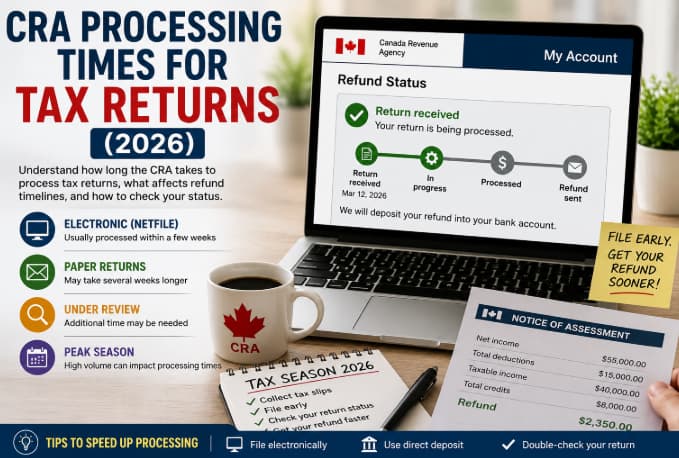
Getting a handle on CRA processing times for tax returns, well, matters for every Canadian taxpayer, especially when a tax refund is on the horizon, or when you are waiting for important benefit payments. each year, lots of Canadians submit income tax returns through the Canada Revenue Agency (CRA), but the timeline can feel different depending on how you file and when.
Some people see their refunds within a handful of days, yet others end up waiting several weeks , or even months if extra checks are required. It is not only one thing either, filing method accuracy, details in the return, missing documents, and yes the heavy pressure during peak tax season all influence how fast your return is handled.
In this guide, we lay out the expected CRA processing times for tax returns in 2026. we also cover what causes hold ups, how to monitor your return status, and a few practical steps to help you get your refund sooner rather than later.
How CRA Processes Tax Returns
After you submit your tax return , CRA starts reviewing the details you put in.
Then the agency compares what you reported against
- T4 slips
- T5 investment income slips
- RRSP contribution records
- Tax credits and deductions
- Employer details
- Your past tax history
Most tax returns get processed automatically in CRA systems, especially if you used certified NETFILE software.
If your return has errors, missing info, unusual requests or needs human checking, the processing can take more time.
Electronic Filing vs Paper Filing
How you file can really shift processing times, in a practical sense.
NETFILE Returns
Electronic filing is usually the quickest choice.
When you file with CRA-certified software via NETFILE, your return is sent straight into CRA systems.
The CRA processes many uncomplicated tax returns relatively quickly, especially when taxpayers file electronically.
- Your personal data matches CRA records
- Your tax slips are correct and consistent
- Direct deposit is set up
- No extra review is required
Electronic filing can also reduce errors because tax software does its own calculations and checks for missing information automatically.
CRA Processing Times for Tax Returns: Paper Tax Returns
Paper returns usually need more processing time
CRA staff has to manually type in and verify the details from mailed returns, which can lead to longer waits, especially during the busy tax season.
Delays in the mail, incomplete forms, and documents that are left out can further stretch the processing timeline
If getting your refund quickly matters, electronic filing is generally the best way
If you’re working on faster payments, you may also want to review our guide on How to Set Up CRA Direct Deposit so refunds go straight into your bank account
CRA Processing Times for Tax Returns: Estimated CRA Processing Times in 2026
Actual timelines can move around, but the way you file often affects how fast your return moves through
Electronic Returns
A lot of electronically filed returns can be handled within a fairly short window if there isn,t any extra review needed.
People who use direct deposit usually get their refunds sooner than those waiting on a paper cheque.
Paper Returns
Paper filed returns tend to lag, mostly because of mailing, plus more manual work in the back end.
If your return lands during peak filing periods, you might see more waiting time, due to workload.
Adjustments and Amended Returns
When you ask for changes after filing, CRA may need more time to examine the supporting proof, before the adjustment goes through.
This can include things like:
- Correcting income
- Adding deductions
- Claiming missed credits
- Updating tax slips
International or Complex Returns
Returns that cover foreign income, business income, rental properties, or bigger deductions may get an extra look.
With more intricate tax circumstances, there may be manual verification, and that raises the processing timeline.
What Can Delay Your Tax Return?
There are several reasons CRA processing can slow down.
Incorrect Personal Information
Even small errors can make your filing get delayed quite a bit.
For example, you might submit the wrong SIN, or put your address with a mismatch. Other issues can include banking information that does not match up, and name differences, like the order or spelling not aligning exactly with what the CRA has.
Go back and review all your details carefully, before you submit your return.
Missing Tax Slips
The CRA compares what you report with what they receive from employers, banks and other groups.
If you forget a slip, or if the numbers are off, it may trigger a review.
Waiting to file until every slip is in hand can reduce the chance of these setbacks.
Manual Reviews
Sometimes the CRA does a manual review to confirm deductions, credits, or claims that look unusual.
That does not always mean there is an actual issue.
In many cases, they simply ask for supporting documents first, and then finish the assessment.
Some examples are:
- medical expenses
- charitable donations
- employment expenses
- tuition claims
Filing During Peak Season
In Canada, most people file between March and April.
Processing can get slower during these months since volumes rise.
Filing earlier in the tax season may help avoid extra delays.
CRA Processing Times for Tax Returns: How to Check your Tax Return Status
The CRA provides multiple ways to keep an eye on your return, without much hassle.
CRA My Account
A fairly easy method is going through CRA My Account.
This online service lets taxpayers, for example:
- See return status
- Look up refund details
- Open notices of assessment
- Refresh personal information
- Handle direct deposit
To better understand online government services, read our article on My Service Canada Account vs CRA My Account, where we explain the differences between these two key platforms.
CRA Mobile App
The CRA mobile tools can also help you check refund status and account information.
Using digital services often gives quicker updates than waiting for paper mail notices.
Notice of Assessment
After the CRA processes your return, you will get a Notice of Assessment.
This document covers:
- Taxable income
- Credits that were claimed
- Refund amount
- Balance owing
- RRSP contribution limits
Review your Notice of Assessment carefully, to make sure every detail is accurate.
CRA Processing Times for Tax Returns: How Direct Deposit Speeds Up Refunds
Direct deposit is still one of the easiest ways to get tax refunds faster, without the usual hassle.
Instead of waiting for a cheque to show up in the mail, your refund is sent straight into your bank account.
Key advantages are:
- Faster access to refunds
- Less postal delay
- Stronger security
- Practical payment options
If you do not use direct deposit, you might face extra waiting time because of mailing and processing.
Internal Link Suggestion:
You can also check our guide on How to Set Up CRA Direct Deposit, for step by step instructions on receiving refunds electronically.
What Happens If Your Return Is Chosen for Review?
Sometimes CRA may ask for more details after they receive your return.
Common examples are:
- Receipts
- Tax slips
- Expense records
- Documents proving deductions
If you reply quickly to CRA requests, it can reduce extra delays.
Getting picked for review does not always mean there’s a mistake, it often is about normal verification procedures, the kind of checks you do routinely. It can feel like something went wrong , but usually it just means the process is looking closely.
What happens if the CRA needs more information ?
In some situations, the CRA may reach out to you to ask for extra details before they finish the tax return assessment. This does not automatically mean you made a mistake. In many cases, it simply means the CRA wants to confirm certain points, or to see the supporting documents more clearly.
You might be asked to provide , for example:
- employment income records
- medical expense receipts
- charitable donation receipts
- childcare expense documentation
- tuition , or education records
- self-employment income and expense details
If you respond quickly , it can reduce avoidable hold ups and keep your file moving.
How to speed up CRA processing times
You cannot steer every part of the CRA system, but there are a few practical moves you can make so your return flows through more smoothly.
- File electronically
Filing with NETFILE certified software is usually the quicker route to submit your tax return. Electronic filing reduces manual data entry, and it helps limit avoidable errors.
- Sign Up for direct deposit
With direct deposit, the CRA can send your refundstraight into your bank account, so you do not have to wait for a mailed cheque, which feels a lot slower than it really is.
- Recheck your return
Before you submit, make sure to verify
- Your Social Insurance Number, SIN
- Your banking information
- mailing address
- income amounts
- Your tax slips
- Your deductions, and credits
Even small mistakes can stretch the processing time, sometimes more than you would expect.
- Keep your CRA My Account current
If you’ve moved addresses, changed marital status, or updated banking details , update your CRA My Account ASAP. This helps avoid interruptions in processing or delays with benefit payments.
- File early
A lot of Canadians hold off until the April deadline. If you file earlier in the tax season, you may sidestep busy processing windows and receive your refund sooner.
What If Your Refund Is Taking Longer Than Expected ?
If your refund has not shown up within the timeframe you were expecting, try not to panic. there can be a few reasons why this is happening. For example, your return might still be under review. Sometimes extra paperwork is asked for, like more supporting documents, or there may be mistakes or incomplete info on file. In other cases, the CRA can have more processing volume than usual, which slows things down a bit. Also, your direct deposit details or your mailing info might need updating before the refund can move forward.
The first step that usually helps is checking your return status through CRA My Account , before you contact the CRA directly.
CRA Processing Times for Tax Returns: What Is Express NOA ?
Some taxpayers who file electronically may get an Express Notice of Assessment, often called an Express NOA, through certified tax software.
With an Express NOA , eligible taxpayers can see their assessment shortly after filing, sometimes even ahead of the official Notice of Assessment. This can be useful because it provides:
- quicker access to assessment results
- early confirmation of refund or any amount you still owe
- a chance to start financial planning sooner
Availability depends on whether you are eligible and on which tax software gets used.
CRA Processing Times for Tax Returns: Common Errors that can delay tax processing
If you try to steer clear of the usual mistakes when filing, it can help move CRA processing along.
Here are some of the more frequent things people trip on:
- Forgetting to include tax slips
- Putting in incorrect personal information
- Claiming deductions without any supportive documents
- Using older banking information
- Filing a duplicate tax return
- Mathematical mistakes or calculation errors (less common when using certified software)
Just taking a couple of extra minutes to review the return can prevent weeks of waiting.
Frequently Asked Questions
How long does CRA take to process an electronic tax return?
Electronic filed returns are usually processed faster than paper ones. Real timelines can change based on your tax situation, and also if extra reviews are needed.
Are paper tax returns slower ?
Yes, they are. Paper returns need manual handling and data entry, so they generally take longer, compared to electronically filed returns.
Can I check my refund status online ?
Yes. You can track your tax return, refund status, and your Notice of Assessment through CRA My Account.
Why is my tax return under review ?
The CRA might review returns to confirm income, deductions, tax credits, or supporting papers. A review does not always mean there is an error, or that you are being audited.
Does filing early help ?
Yes. Filing early may reduce delays during peak season for filings, and can help you receive your refund and benefit payments sooner.
Final Thoughts
Getting a feel for CRA processing times for tax returns helps you set real expectations about when your refund shows up, or when a Notice of Assessment might appear. A lot of electronically filed returns get handled fast, but the timeline can shift depending on how you filed, how correct the return is, and if CRA needs extra verification.
To prevent pointless slowdowns, file online, double check every detail, sign up for direct deposit, and keep your CRA My Account updated. Also, filing earlier can matter, and responding quickly to any CRA request will make things move more smoothly, in many cases.
If you are waiting on a refund, or you just want to confirm your tax standing, tracking CRA processing timelines reduces the stress of tax season. It can also help you avoid interruptions when you rely on government benefits.