
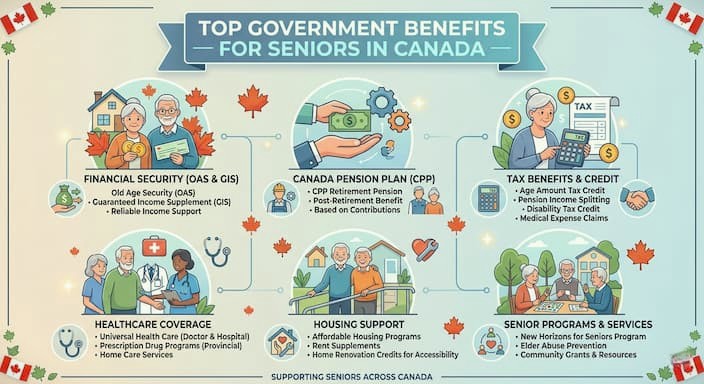
As living costs keep going up across Canada, Government Benefits for Seniors in Canada still act as a vital safety net for millions of seniors. Programs like Old Age Security (OAS), Canada Pension Plan (CPP), Guaranteed Income Supplement (GIS), provincial support programs, and healthcare benefits help older Canadians handle day-to-day retirement spending and keep their financial footing steady.
For 2026, a lot of seniors are likely to see refreshed payment amounts. These changes can come from inflation adjustments and affordability steps. Knowing what options exist is useful because it can help retirees boost their monthly income and also reach important financial goals.
This full guide walks through the main government benefits for seniors in Canada in 2026. You’ll find eligibility rules, payment specifics, provincial programs, dental support, and practical ways to increase overall retirement income.
Why Government Benefits Matter for Seniors in 2026
Retirement costs in Canada continue increasing because of:
- Inflation
- Higher housing costs
- Grocery price increases
- Rising healthcare expenses
- Utility and transportation costs
For many seniors, government benefits provide a critical monthly income that helps cover daily living expenses.
Programs like CPP, OAS, and GIS form the foundation of retirement income for millions of Canadians.
1. Old Age Security (OAS)
Old Age Security OAS is one of the more important federal retirement supports for seniors in Canada.
Unlike CPP, OAS gets funded through general government tax revenues, and it does not really rely on employment contributions.
Who can qualify for OAS?
If you want to qualify for OAS in 2026, you generally need to
- Be 65 years old or more
- Be a Canadian citizen or legal resident
- Have lived in Canada for at least 10 years after turning 18
Getting the full OAS amount usually means 40 years of Canadian residency after age 18
OAS payment amounts in 2026
The OAS payment amounts are reviewed each quarter, based on inflation
- Your payment level can change depending on
- Your age group
- Income level
- Your residency history
Seniors who are 75 and older often receive a bit higher payment compared with the 65 to 74 group
Why OAS matters
OAS supports seniors with everyday costs like
- Housing
- Food staples
- Utility bills
- Getting around transportation
- Health-related expenses
Complete guide:
2. Guaranteed Income Supplement (GIS)
The Guaranteed Income Supplement (GIS) gives extra, completely tax-free money support for low-income seniors who are already getting the OAS, yes, that OAS.
GIS is one of the most valuable assistance programs for retired Canadians living on a limited income.
Who can receive GIS?
Typically, the eligibility depends on a few things, like
- Receiving OAS
- Low annual income
- Canadian residency status
- Marital status
Single seniors, as well as lower-income couples, may be eligible for higher GIS amounts; sometimes, the difference can be pretty noticeable.
Why GIS matters so much for seniors
GIS supports many retirees who are dealing with
- Rising rent costs
- Food inflation
- Medical expenses
- Utility bills
Without GIS, many seniors would run into serious financial strain, and that can quickly become overwhelming.
GIS payment changes for 2026
GIS payments are checked each quarter to match inflation updates.
Possible 2026 changes could include:
- Bigger monthly amounts
- Raised income cut-offs
Additional aid for vulnerable seniors
3. Canada Pension Plan (CPP)
The Canada Pension Plan (CPP) is also a big retirement income thing for Canadians, ya know.
In contrast to OAS, CPP basically follows contributions you made during your working years, not just residency or age alone.
How CPP Functions
People put money into CPP while they’re employed, and later, the retirement benefits come out based on a few factors, like
- What your contribution history looked like
- your earnings over time
- When you choose to retire
- How many years have you worked
CPP Retirement Age Options
You can start your CPP
- as early as 60
- at the usual age, which is 65
- or even wait until age 70
Delaying CPP tends to raise the monthly amount, generally speaking.
CPP Benefits You Might See in 2026
In 2026, CPP can include things such as:
- retirement pension
- disability benefits
- survivor benefits
- death benefits
A lot of Canadians lean on CPP quite a bit, especially along with OAS and GIS.
CPP Payment Increases in 2026
CPP payments are typically tuned up every year for inflation, plus there can be enhancement programs involved, too.
Possible updates in 2026 might be:
- bigger max monthly benefits
- higher contribution limits
- larger retirement payouts
Must Read:
4. Allowance and Allowance for the Survivor
Some Canadians might not know about extra support programs that go along with GIS, and yeah there are a couple of them.
Allowance Benefit
The Allowance is meant for low-income people aged 60–64, when their spouse or partner is already getting GIS.
Allowance for the Survivor
This program helps low-income, widowed Canadians who are also aged 60–64.
Overall, these programs kind of smooth out the financial gaps until you’re eligible for OAS at 65, and then the waiting ends.
5. Canada Dental Care Plan for Seniors
Dental care costs can turn into this big, constant burden when you’re in retirement, and honestly, it can feel like a lot all at once.
The Canada Dental Care Plan, or CDCP, is set to keep growing, and in 2026, it will keep expanding help for seniors who qualify.
Why Dental Support Matters
Many retired Canadians lack private dental insurance after leaving work.
Dental expenses can include:
- Cleanings
- Fillings
- Dentures
- Tooth extractions
- Emergency dental care
Without support, seniors may delay necessary treatment.
Who qualifies can depend on things such as
Eligibility may depend on:
- Income level
- Residency
- Lack of private dental insurance
The federal government has expanded dental support programs for seniors in recent years.
6. Provincial Senior Benefit Programs
Besides federal benefits, provinces sometimes bring forward extra assistance programs for seniors, you know, like a little more help.
In general, these programs can be pretty different from province to province, across Canada.
Ontario Senior Programs
In Ontario, there are several supports for older adults, such as:
- Ontario Trillium Benefit
- property tax reductions for senior homeowners
- electricity support programs
- pharmacy drug benefit coverage
👉 Ontario Trillium Benefit payment dates 2026
British Columbia Senior Benefits
BC seniors may access:
- BC Senior’s Supplement
- Housing support
- MSP-related healthcare support
- Transportation discounts
Alberta Senior Benefits
Canada, Alberta provides programs such as:
- Alberta Seniors Benefit
- Dental and optical assistance
- Prescription drug support
Quebec Senior Assistance Programs
Quebec seniors may qualify for:
- Financial assistance supplements
- Housing support
- Prescription assistance
- Family allowance supplements
Why Provincial Programs Matter
Many seniors focus only on federal benefits and miss additional provincial assistance.
Combining federal and provincial programs can significantly improve retirement income.
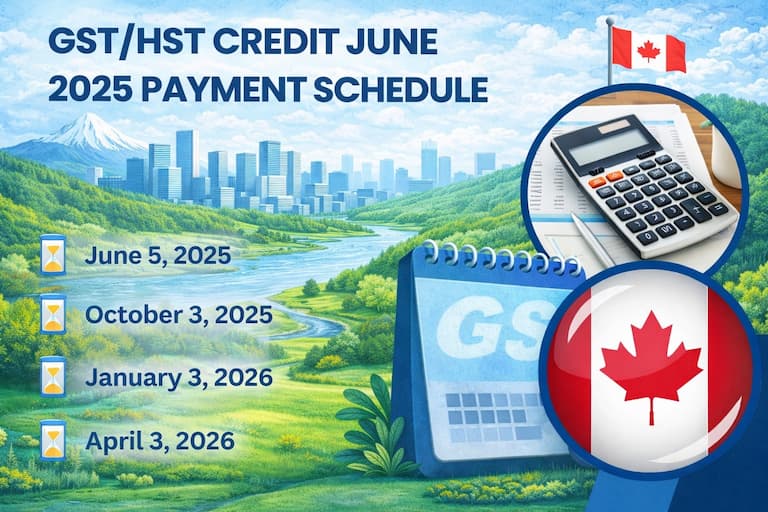
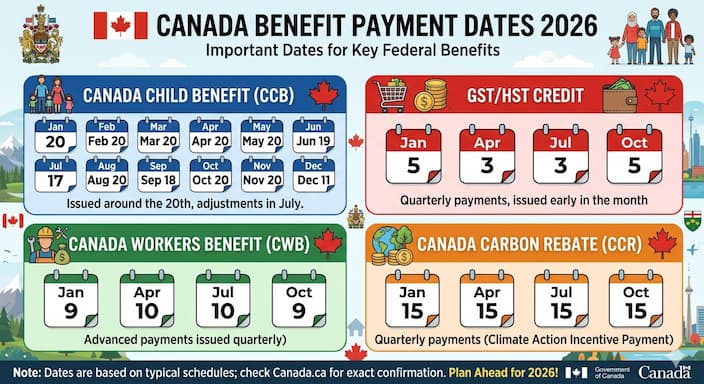
7. GST/HST Credit for Seniors
Low- and modest-income seniors can also fit the bill for the GST/HST Credit.
This tax-free quarterly payment kinda helps counter sales taxes, and the everyday living stuff.
Why seniors may like GST payments
GST payments could assist with:
- Food shop expenses
- Home household costs
- Utility service bills
- Getting around, transportation
Plenty of retirees on fixed incomes rely on these extra quarterly cheques.
👉 GST/HST Credit Payment Dates 2026
8. Canada Carbon Rebate for Seniors
Seniors who live in eligible provinces can get Canada Carbon Rebate payments, kind of like a small but helpful reset. These quarterly payments do what they’re meant to—help balance out carbon pricing costs.
Why carbon rebates help seniors
Day-to-day energy, and especially fuel expenses, can hit retirees pretty hard. So carbon rebates may come in handy for things like
- Heating costs
- Fuel expenses
- Energy bills
👉 Canada Carbon Rebate Payment Dates 2026
9. Property Tax and Housing Assistance Programs
Housing affordability is still a big challenge for lots of older Canadians; it just doesn’t seem to go away.
A few provinces and municipalities offer some kinds of support programs for seniors, in one form or another.
Common Housing Support Programs, sometimes called assistance measures
Examples might be things like:
- Property tax deferrals.
- Rental assistance
- Utility subsidies and other reductions
- Senior housing grants
When these supports are used, they can really ease the budget strain during retirement.
10. Prescription Drug Coverage for Seniors
During retirement, prescription medications can get kinda expensive fast, you know.
A lot of provinces offer reduced-cost drug coverage for seniors, in case anyone’s wondering.
These options usually fall under Provincial Drug Programs, and the exact details are not always the same; it kinda depends.
If you qualify, the coverage may help lower costs for things like :
- Prescription medications
- Ongoing care for chronic illness
- Diabetes supplies and related needs
- Medical devices, equipment, and all that
But eligibility shifts from province to province, and also with your income level.

How Seniors Can Maximize Government Benefits in 2026
A lot of Canadians don’t end up getting every benefit they should, like not even the ones they qualify for, and it can feel kinda random. Still, there are a few practical things you can do to stretch retirement support as much as possible, even if things seem complicated at first.
1. File Taxes Every Year
It’s easy to think “low income, so no need,” but even seniors with smaller incomes should still file taxes annually.
Most programs and supports from the government are tied to what’s in your tax return data, so if that info isn’t there, the system can miss you, pretty quietly.
2. Apply for GIS
Some seniors get GIS automatically, but many others need to apply.
GIS may boost your monthly retirement income by quite a bit, in a way that can really matter day to day.
3. Delay CPP if Possible
If possible, waiting until age 70 can raise CPP payments substantially.
This approach can be especially helpful if you have other income sources in the meantime, or if your retirement plan is flexible.
4. Review Provincial Programs
Provincial programs are often overlooked, like people just assume it’s only federal help.
Make sure you check your province’s websites regularly, since new senior support programs and updates can show up without much notice.
5. Use Direct Deposit
Direct deposit helps payments arrive faster, and it also tends to be safer.
So it’s usually worth doing early, and then confirming everything is correct.
👉CRA Direct Deposit Setup Guide 2026
Common Challenges Facing Seniors in Canada
Even with government help, a lot of seniors still end up dealing with financial pressure. It can feel like it never fully eases, because everyday spending keeps stacking up.
Rising Cost of Living
Inflation keeps pushing the price tags higher on things like:
- Food
- Housing
- Utilities
- Transportation
- and healthcare expenses
Prescription medications, dental services, and mobility aids can end up costing far more than people expect.
Fixed Retirement Income
A good number of seniors live on a set monthly amount. That money often just doesn’t match the pace of those rising costs, so budgets get tight faster than they should.
Benefit Increases Expected in 2026
In 2026, several government supports might go up, mostly because of inflation readjustments.
These potential changes could touch:
- CPP
- OAS
- GIS
- GST Credit
- and certain provincial support programs
👉 Canada Benefit Increase 2026: Which Payments Are Going Up?
Frequently Asked Questions(FAQ)
What is the best government benefit for seniors in Canada?
OAS, CPP, and GIS are considered the main retirement support programs for seniors.
Can seniors receive both CPP and OAS?
Yes. Many retirees receive both CPP and OAS payments together.
Is GIS taxable?
No. GIS payments are generally tax-free.
Are provincial senior benefits separate from federal benefits?
Yes. Provinces offer additional programs that vary by location.
Can seniors get dental coverage in 2026?
Eligible seniors may qualify for government dental support programs depending on income and insurance status.
Final Thoughts
In Canada in 2026, government benefits for seniors keep playing a kind of critical role in supporting retirement income, and affordability too. Programs like OAS, GIS, CPP, GST credits, provincial help, and dental support still help millions of older Canadians manage the higher everyday costs
Figuring out what options are around and actually applying for every benefit they qualify for, can really strengthen financial security once retirement starts. It also helps if seniors keep an eye on annual payment changes, make sure taxes are filed on time, and read up on any new federal or provincial programs that come out.
Because affordability pressures keep showing up across the country, these public assistance programs stay pretty essential for seniors, so they can maintain stability, independence, and a decent quality of life through retirement
Pingback: Canada Housing Benefit 2026 Guide | Benefitspulsehub
Pingback: OAS Clawback 2026: Income Limits & How to Avoid It