
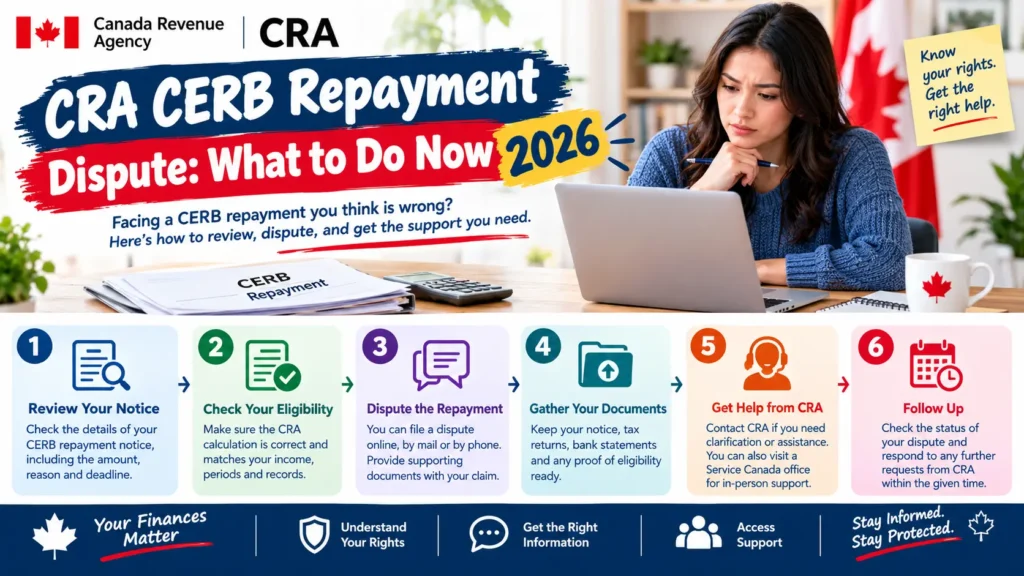
Getting a letter from the CRA saying you owe money back from a pandemic-era benefit can feel like a punch to the gut, especially years after the fact. If you’re dealing with a CRA CERB repayment dispute, the good news is there’s an actual process for pushing back — you don’t have to just pay whatever the letter says without a second look. Here’s exactly what to do, step by step.
Why This Is Still Happening Years Later
CERB and related pandemic benefits were based on self-attestation — applicants determined their own eligibility at the time, rather than the CRA verifying it upfront. That approach got money out quickly during a crisis, but it also meant a lot of eligibility checking happened after the fact, sometimes years later. Canada’s auditor general found that roughly $4.6 billion in pandemic benefits went to people who weren’t actually eligible, and the CRA has been working through recovery ever since — which is why letters are still landing in mailboxes long after the programs themselves ended.
Step 1: Don’t Panic, and Don’t Ignore It Either
The instinct when a CRA letter shows up is either to panic and pay immediately, or to set it aside and hope it goes away. Both are the wrong move. If you genuinely believe you were eligible, you’re entitled to ask for a second look before paying anything — but ignoring the letter entirely just lets the CRA move ahead with collection action, including withholding future tax refunds or other benefit payments.
Step 2: Read the Letter Carefully and Note the Deadline
CRA repayment letters (often called a notice of redetermination or a statement of account) outline the specific reason for the reassessment and the deadline for responding. This deadline matters — missing it can limit your options for disputing the decision later, so treat it as the first priority once the letter arrives.
Step 3: Gather Your Documentation
If you’re disputing the CRA’s decision, evidence is what actually moves the needle. Useful documents include:
- Pay stubs or records showing your income during the period in question
- Bank statements showing deposits and account activity
- Records of any self-employment income or invoices
- Proof of job loss, reduced hours, or business closure tied to the pandemic
- Any correspondence you already had with the CRA about your original application
Step 4: Request a Reconsideration or File a Formal Objection
You have two main paths, depending on where you are in the process:
- CERB reconsideration — a first-level request asking the CRA to take another look at your case with additional documentation, generally the faster and less formal route.
- Formal Notice of Objection — a more structured dispute process if the reconsideration doesn’t resolve things in your favour, or if you’re disputing a formal assessment rather than an initial determination. This goes through the CRA’s official objections, appeals, and disputes process.
Submit whatever supporting documents you have alongside your request rather than a bare denial — a well-documented dispute is far more likely to succeed than a simple “I disagree.”
Step 5: Know What Happens If You Don’t Repay
The CRA currently isn’t charging interest or penalties on COVID-19 benefit debts, which gives some breathing room. But if the debt isn’t repaid or successfully disputed, the CRA can:
- Withhold future tax refunds
- Offset the debt against other federal benefits you’re entitled to
- Send the debt to collections
- In some cases, pursue further legal action
This is part of why responding rather than ignoring the letter matters — the CRA has real tools to recover the money automatically through what it calls “offsetting,” pulling from refunds and other payments without a separate court process.
What If You Already Repaid, But the CRA Is Still Asking?
This has been a real, documented problem — some Canadians who repaid a CERB overpayment have still had their tax refund withheld afterward, sometimes due to processing delays or records not being properly updated on the CRA’s end. If this happens to you:
- Keep proof of your original repayment — a receipt, bank record, or confirmation number.
- Contact the CRA directly and reference your repayment specifically, rather than assuming the system will catch up on its own.
- Escalate to the Taxpayers’ Ombudsperson if the CRA doesn’t resolve it after a reasonable follow-up — this office specifically handles complaints about how the CRA has treated taxpayers, separate from the tax dispute itself.
Should You Get Professional Help?
For straightforward cases with clear documentation, many people handle a reconsideration request themselves. But if your case is complex, involves a large amount, or has already been denied once, getting help from an accountant or, in more serious disputes, a lawyer, can be worth it — some organizations have even run pro bono legal assistance programs specifically for CERB repayment disputes in the past.
Keeping Your CRA Account Details Current While You Dispute
Since correspondence about your case flows through your CRA account and mailing address, it’s worth double-checking both are current before you start a dispute — a letter that goes to an old address can quietly blow past your response deadline. See our guides on updating your address with the CRA and setting up CRA My Account 2026, which lets you track correspondence and case status directly online rather than waiting on mail.
Frequently Asked Questions
What is a CRA CERB repayment dispute?
It’s the process of formally challenging a CRA decision that you owe money back for CERB or another pandemic benefit, either through a reconsideration request or a formal Notice of Objection.
Do I have to pay the CRA immediately while I’m disputing a CERB repayment?
Not necessarily — you can request a reconsideration or file an objection before paying, though it’s important to respond before any stated deadline in your letter to preserve your options.
Is the CRA charging interest on CERB repayment debts?
No, the CRA is currently not charging interest or penalties on COVID-19 benefit debts, though the underlying debt still needs to be resolved or repaid.
What happens if I already repaid CERB but the CRA is still asking for it?
Contact the CRA directly with proof of your repayment. If it isn’t resolved, you can escalate the complaint to the Taxpayers’ Ombudsperson.
What documents do I need for a CERB repayment dispute?
Pay stubs, bank statements, self-employment records, proof of job loss or reduced income, and any prior correspondence with the CRA about your original application.
What’s the difference between a reconsideration and a formal objection?
A reconsideration is a faster, less formal first request to review your case. A formal Notice of Objection is a more structured dispute process used if the reconsideration doesn’t resolve the issue.
This article is for informational purposes only and does not constitute legal or tax advice. For complex disputes, consult a qualified accountant or tax lawyer.
Stay updated with the latest Canada government benefits, payment dates, and CRA news — explore more guides at Benefits Pulse Hub.