What happens if you file your taxes late in Canada? It’s a question many taxpayers ask each year. Filing your income tax return by the due date is one of the biggest financial responsibilities for Canadians. Every year, millions of taxpayers submit their returns before the Canada Revenue Agency (CRA) deadline to avoid penalties, interest charges, and delays in receiving government benefits.
But real life is messy. Maybe you forget the date, you misplace those essential tax papers, or you just need more time, to be thorough, and careful. If you miss the filing deadline, you might start asking yourself whether the penalties will be rough, or if there is still a way to keep the damage low.
The positive part is that filing late does not always turn into the worst possible outcome. What happens depends on a few things. For example, do you owe taxes, are you expecting a refund, and have you filed late before in earlier years.
In this guide we ll talk about what really happens if you file your taxes late in Canada in 2026, and how CRA actually figures out penalties and interest. We will also cover how late filing can mess with your government benefits, and what you can do to limit extra charges or prevent them altogether.
What Is the Tax Filing Deadline in Canada for 2026?
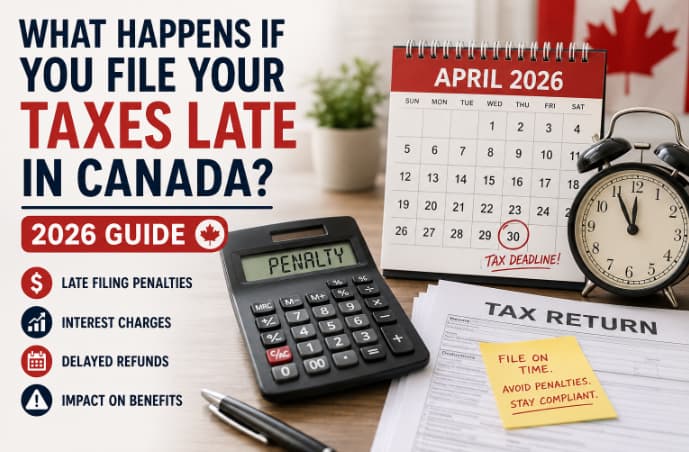
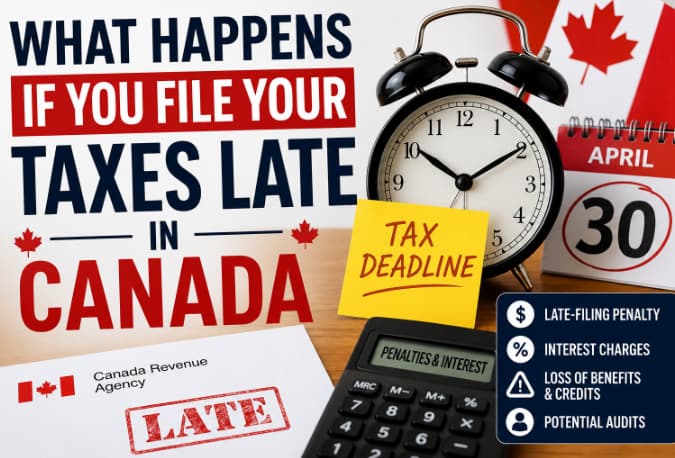
For most people, the tax filing deadline stays April 30, 2026, for income earned during the 2025 tax year.
If you or your spouse, common-law partner are self-employed, you usually have until June 15, 2026 to file your return. But the taxes you owe are still generally due by April 30, 2026. If you miss the payment deadline you can still get hit with interest charges, even if your filing deadline is later.
Staying on top of these dates helps you:
- Avoid CRA penalties, and related consequences
- Reduce daily interest charges
- Get refunds earlier
- Keep government benefits from being interrupted
- Keep a clean and reliable tax record
If you’re not 100% sure about what you need to file, it’s a good idea to check your tax papers well before the deadline , because waiting until the last minute can make things messy.
If you’re still getting your return ready , you can also read our guide on How to File Your Taxes in Canada for Beginners, that way you understand the filing process before the deadline.
What happens if you miss the tax filing deadline ?
Not filing by the due date does not always mean you will automatically get a penalty. The result really depends on your tax situation.
Usually, there are a few common outcomes , and these show up most often.
You Owe Taxes
This is typically where penalties are most likely to apply.
If the CRA decides that you owe taxes, and you file after the deadline, you may be charged
- a late-filing penalty
- daily compounding interest on any unpaid taxes
- extra penalties if you keep filing late
In general, the longer you delay, the more it costs.
You Are Receiving a Refund
If CRA owes you money, there is often no late-filing penalty, just because you sent your return after the deadline, that is the usual idea anyway.
Still, if you keep delaying the return, you also keep delaying the refund, so it feels like you’re waiting twice.
Lots of Canadians unknowingly leave hundreds, even thousands of dollars sitting there unclaimed because they postpone filing their taxes, like it will handle itself.
You Owe Nothing
If your return shows you have no balance owing and no refund, then you might be able to avoid penalties altogether.
That said, filing remains important, because CRA uses the information in your return to check eligibility for many federal and provincial benefit programs.
What Happens If You File Your Taxes Late in Canada: CRA Late Filing Penalty Explained
If you owe taxes and file after the deadline, CRA generally applies a late-filing penalty.
The usual penalty looks like this
- 5% of your unpaid tax balance, plus
- 1% of the unpaid balance for every full month your return is late, up to a set maximum period
For example:
Let’s say you owe $4,000 in taxes.
Your first late-filing penalty would be:
5% × $4,000 = $200
If your return stays late for a few months, the monthly penalty keeps climbing, and it can end up on a higher total amount owing.
This penalty runs separate from the interest charges, so your overall balance can rise faster than most taxpayers assume.
What Happens If You File Your Taxes Late in Canada: Interest Charges Keep Growing
Lots of folks look only at the late-filing penalty.
But in many situations, interest becomes the bigger expense.
The CRA generally adds compound daily interest on any unpaid tax amount, starting after the payment due date.
That means the interest gets worked out daily on both,
- your unpaid taxes
- and any interest that has already built up
Because of this, waiting several months, or even longer, to file and pay could make what you owe noticeably bigger.
Even when you cannot pay the full tax bill right away, filing your return on time helps you avoid the late-filing penalty, while also keeping further costs more limited.
What If You Filed Late Before?
The CRA can apply tougher consequences to repeat late filers.
If you have already gotten a late-filing penalty in the last few tax years, and then you owe taxes again, the penalties could be much more than the normal rates.
This approach seems meant to push taxpayers into filing on time, day after day, not repeatedly dropping the deadline.
Since repeat penalties can raise your tax bill a lot, its generally a better idea to send in your return ASAP, even if you cannot pay the full amount right away.
Can You File Late Even If You Can’t Pay?
Yes.
One of the biggest misunderstandings I see with taxpayers is thinking they should delay filing until they finally have enough money in hand to cover the tax bill.
That is usually the pricier option.
Instead, file your return by the filing deadline, even if you can’t pay the balance immediately.
That can help you:
- Avoid the late-filing penalty
- Reduce extra charges
- Confirm exactly what you owe
- Talk through payment arrangements with CRA if necessary
Remember, filing your return and paying your taxes are two separate obligations. Filing on time is often the best first step, even when payment has to come later too.
How Late Filing Can mess with Government Benefits
A lot of Canadians don’t realize that tax returns are used to figure out eligibility for multiple federal and provincial benefit programs.
If you don’t file your taxes, your benefits can be delayed, paused, or adjusted again because CRA does not have the updated income details.
Programs that often depend on your tax return include:
- Canada Child Benefit (CCB)
- GST/HST Credit
- Canada Carbon Rebate (when applicable)
- Provincial and territorial tax credits
- Different income-tested benefit programs
Even if you had little, or no income during the year, filing helps confirm you keep receiving the benefits you qualify for.
What If You Cannot Afford to Pay Your Taxes?
A lot of Canadians end up worrying about their tax bill more than the actual filing part, honestly. If this is you, the key thing to keep in mind is don’t delay filing your return, even if it feels messy right now.
When you file on time you can help avoid the CRA’s late-filing penalty. This still matters even when you cannot settle the amount owing straight away.
If you can’t pay your taxes in full, try these options instead:
- Pay as much as possible to lower the interest charges.
- Put in extra payments whenever your budget improves a bit.
- Reach out to the CRA and ask about a payment arrangement, especially if you are dealing with genuine financial hardship.
- Do not ignore CRA letters and notices. Unresolved tax debt can lead to additional collection actions later on, and that can get worse quickly.
Starting early often brings a better outcome than waiting until your balance gets bigger because of interest.
What happens if you never file your tax return?
When you ignore your tax duties for months or even years, it can turn into much bigger issues than just filing late
If you do n’t submit your return , the CRA may :
- keep charging interest on the unpaid taxes, even after the deadline passes
- add penalties where it applies
- send follow up reminders asking for the return
- approximate your income based on what they can see, then issue an assessment
- start collection actions if the taxes remain unpaid
Also, you may lose access to valuable government benefits , because the CRA cannot decide if you are eligible without a recent tax return
Filing sooner usually makes it easier to iron out your tax situation
What Happens If You File Your Taxes Late in Canada: How to File a Late Tax Return
Even if you missed the deadline, you really should file your return as soon as you can. And yes, it will feel a bit messy at first but the process is basically the same as filing on time.
Step 1: Gather your tax documents
Collect what you need, including
- T4 slips
- T5 investment income slips
- RRSP contribution receipts
- Tuition receipts
- Medical expense records
- Charitable donation receipts
- Other relevant tax documents
Step 2: Prepare your return
Use approved tax software, or work with a qualified tax professional to put everything together correctly.
Before you submit, take a careful look at:
- Your personal details
- Income amounts
- Your deductions
- Tax credits
- Your banking details for direct deposit
Step 3: Submit your return
Most Canadians file online using NETFILE-compatible software.
Filing electronically is usually the quicker route, and it often helps with earlier processing.
Step 4: Pay Any balance you owe
If you are able, make the payment right away, so you do not leave anything hanging.
If you can’t pay everything at once, paying even part of it can cut down the future interest charges, at least somewhat.
Tips to stop filing late in coming years
Missing the tax deadline one time can feel stressful. Thankfully, there are a few approaches that make future filing seasons easier.
Keep your tax documents organized
Put your tax slips in a single safe place all year long, not while you’re scrambling in April, because that can drag things out.
What Happens If You File Your Taxes Late in Canada: File Early
A lot of taxpayers wait until the final week, before the actual deadline.
Filing earlier gives you more time to fix mistakes, ask for missing documents , and steer clear of those last-minute tech headaches.
Sign Up for CRA Online Services
With a CRA online account it becomes easier to :
Look at tax information
Review notices of assessment
- Keep an eye on refunds
- Update personal details
- Keeping your tax records in a digital way can help reduce filing slip ups.
For more clarity on your online tax services, read our guide on My Service Canada Account vs CRA My Account, it breaks down what each government portal is for.
Set Annual Reminders
Put the tax deadline on your calendar and set reminders a few weeks in advance.
Even a simple phone nudge can help prevent missing important dates.
Consider Professional Tax Help
If your taxes have self employment income, investments, rental properties, or a few different ways you earn money, then working with a tax professional might help you avoid errors and make sure you claim every deduction, credit you’re actually eligible for.
What Happens If You File Your Taxes Late in Canada: Frequently Asked Questions
Is there a penalty if I file late but I don’t owe any taxes?
In most cases, no. If you don’t owe taxes, the CRA usually does not add a late filing penalty. But if you delay, it can postpone refunds and government benefits.
Can I still get my tax refund if I file late?
Yes. If you’re owed a refund, you can still receive it after you submit a late return. Filing later only changes the timing of when you get the money.
Does the CRA charge interest every day?
Yes. Interest on unpaid balances is generally calculated daily on a compounding basis, so the amount owed can increase over time.
Can I make payments after filing?
Sure. Filing your return and paying your taxes are separate things, like two different chores, not one. You can send your return first, then do the payments afterward if needed.
So, what happens if you ignore CRA letters? If you don’t respond to CRA correspondence, you might face extra interest, stronger collection efforts, and more time spent just trying to straighten everything out. In most cases its better to reply quickly, and deal with the open items right away.
Final Thoughts
Filing your taxes late in Canada can cost you money, especially if you owe taxes. There can be late-filing penalties, plus a daily compound interest charge, and it adds up the longer you leave it.
The good part is filing your return even if you cant pay immediately is usually the better move. Getting it in sooner can reduce penalties, help keep access to government benefits, and move you closer to resolving any remaining balance.
If you are expecting a refund, filing late usually wont bring a penalty, but it often means it takes longer to get the money you are owed. Whether you owe taxes or you are waiting for a reimbursement, staying current with your tax submissions keeps your financial paperwork in good order, and it also helps maintain uninterrupted access to important federal plus provincial benefits programs
Since tax rules and interest rates can shift over time, make sure you always check the most recent CRA guidance, or get professional tax advice if your situation is involved, or if you think it might be complicated.